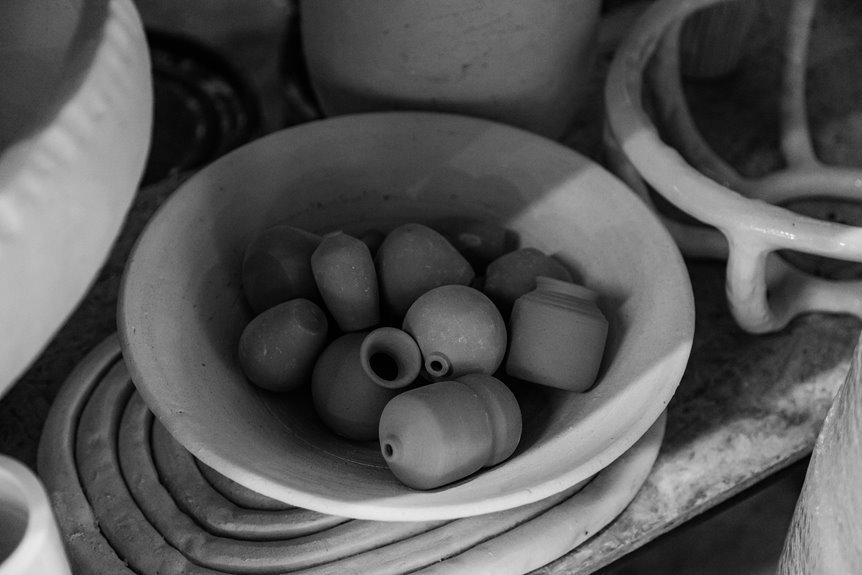
Pottery is clay shaped by hand or wheel, while ceramics covers a broader range—industrial tiles, heat-resistant materials, and even non-clay products. Pottery gets handmade in studios; ceramics uses factories and machines to produce thousands of identical pieces. The firing process differs between the two, affecting durability and texture. Pottery has a rough, artisanal quality, while ceramics present a smooth, uniform appearance.
Handmade pottery commands higher prices due to labor costs.
Additional distinctions exist worth understanding.
Pottery vs. Ceramics: What Counts as What
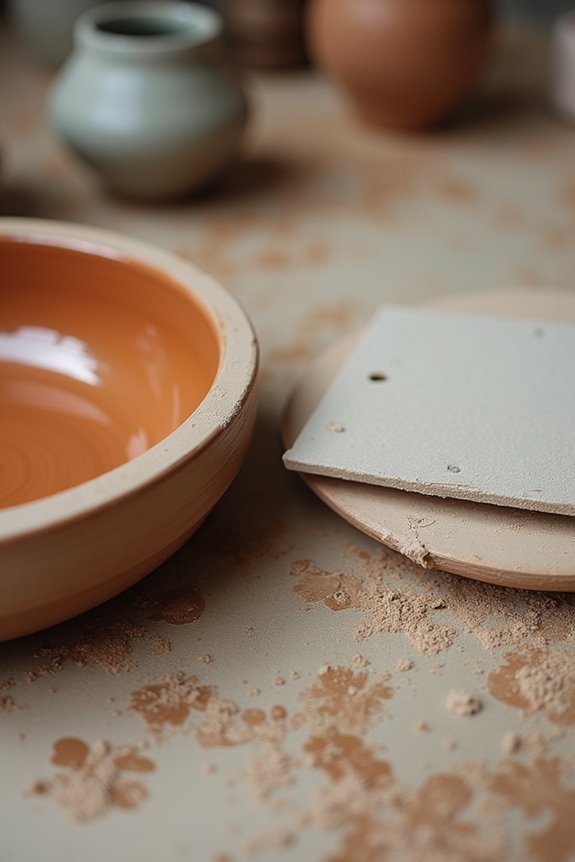
You’ve probably heard these two words used interchangeably, but they have distinct meanings. Ceramics is the broader term, covering everything from clay sculptures to industrial tiles and glazed dishes. Pottery, by contrast, is more specific—it refers to handmade or wheel-thrown functional pieces like bowls, pots, and mugs. All pottery qualifies as ceramics, but not all ceramics are pottery. The primary difference is that pottery typically receives a glaze to achieve waterproofing, while ceramics can be either glazed or unglazed. Recognizing this distinction allows you to better appreciate the craft involved in each piece you encounter.

This rustic stoneware berry bowl features integrated handles and a naturally variating reactive glaze

This boho-inspired serving bowl features an organically-shaped stoneware silhouette with a sculptural base and handle, finished in a natural variating reactive glaze
What They’re Made From: Just Clay vs. More Options
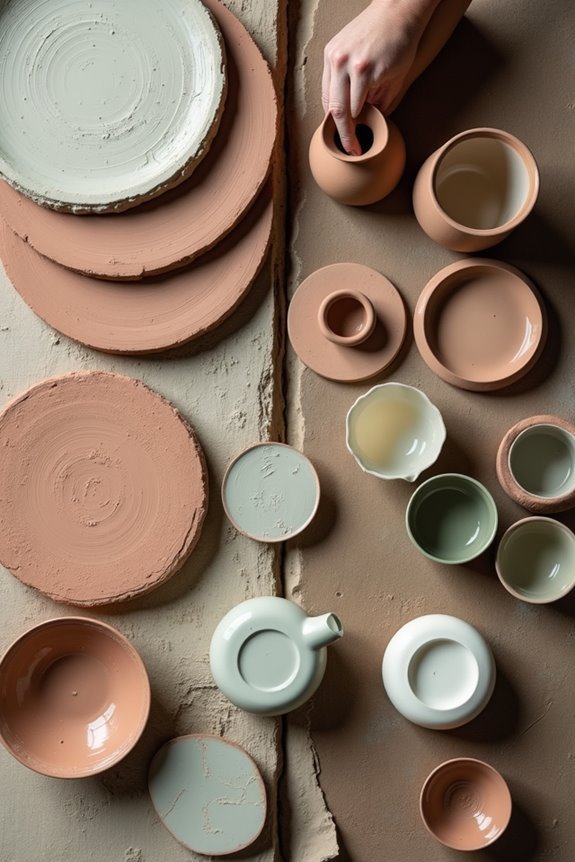
Once we dig into what pottery and ceramics are actually made from, the differences become clear—and it’s where things get interesting. Here’s the thing: pottery sticks to clay, period. We’re talking earthenware, stoneware, and porcelain—each with their own firing ranges and textures that make them distinct. Ceramics? They’re the adventurous cousins. Sure, they include clay-based ceramics like that fancy porcelain kaolinite stuff, but they also embrace non-clay inorganic materials like silica and glaze. We’re even talking ceramic composites and technical ceramics—basically, materials engineered for specific jobs beyond your kitchen bowl. So when you’re making pottery, you’re limited to traditional clay options. When you’re working with ceramics, you’ve got way more creative freedom and industrial possibilities. That’s the real distinction.

【Color and Size Specifications】:1.5IN/38mm(Width), 10.5FT/3.2m(Length), 0.04IN/1mm(Thickness) Color: White caulk tape waterproof sealant caulk strip has a crease in the middle. CDFYREC caulking strip with crease design can be folded to 90 degrees for tightly sealing gaps between walls.

Nexus Vinyl Tiles: Refresh your home for a low cost and no hassle with the Nexus Vinyl Floor Tiles. Our tiles can be used in any room in your home including the kitchen, dining room, bedrooms, bathrooms, foyers, and basements. No messy glue or adhesives needed. Includes 20 vinyl tiles.

Floral Mediterranean Encaustic Pattern Ceramic Tile, Exact measurement: 11-13/16" x 11-13/16"
How They’re Produced: Hand and Wheel vs. Industrial Methods
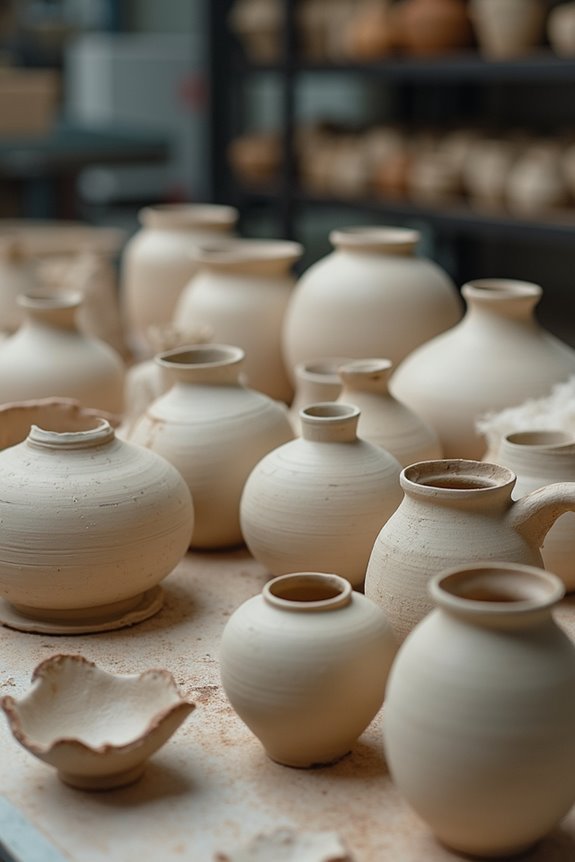
When you’re making pottery, you’re likely using your hands—whether that’s coiling clay into spirals, slapping it onto a wheel, or pinching it into shape—but ceramics? They can be made all sorts of ways, including those same handmade methods plus slipcasting (pouring liquidy clay into molds) and industrial techniques like extrusion and automated pressing. The key difference is scale and intention: potters typically create small batches or one-of-a-kind pieces in studios, whereas ceramic manufacturers produce thousands of identical tiles, insulators, and other items using standardized molds and machines. So the production method you choose depends on whether you want that artisanal, handcrafted quality or the consistency and speed that comes with industrial processes.
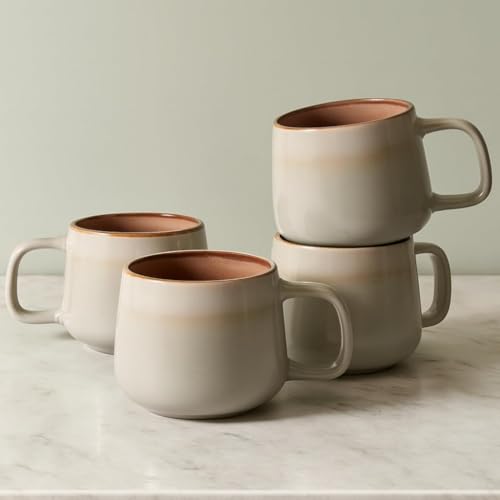
Perfect Mugs for Your Daily Rituals: Sip your favorite coffee, latte, or tea in style with our 12 oz Ava Nord stoneware coffee mugs. Designed with a comfortable grip and stackable feature, these mugs elevate your daily moments while saving space in your kitchen.

A COMPLETE SET INCLUDES: Four 18oz stoneware mugs
Perfect Mugs for Your Daily Rituals: Sip your favorite coffee, latte, or tea in style with our 16 oz Ava Nord stoneware coffee mugs. Designed with a comfortable grip and stackable feature, these mugs elevate your daily moments while saving space in your kitchen.
Hand-Building and Wheel-Throwing
Because clay’s so wonderfully responsive to touch, artists have developed two completely different ways to shape it—and honestly, they couldn’t be more different from each other.
Hand-building lets you manipulate clay directly with your hands and simple tools through:
- Pinching, coiling, and slab construction
- Creating one-of-a-kind, irregular textures and forms
- Working at your own pace without equipment
- Building unique pottery pieces with character
Wheel-throwing, meanwhile, demands serious skill. You center spinning clay, applying even pressure while the form develops. It produces symmetrical, refined pottery with consistent profiles.
Both methods start with wedging—removing air pockets so your clay’s ready to work. Here’s the thing: hand-building celebrates imperfection and individuality, while wheel-throwing chases precision and balance. Neither’s better; they’re just different languages for speaking through clay.
Industrial Ceramic Production
Now, here’s where things get really interesting—while studio potters are carefully centering clay on their wheels or coaxing forms from their hands, massive factories are running ceramics through an entirely different operation. I’m talking about automated production lines where slip casting, injection molding, and press-and-sinter techniques create non-clay ceramics at high speed. These industrial kilns—think tunnel kilns, shuttle kilns, and roller hearth kilns—fire thousands of pieces continuously, not in small batches like pottery studios do with batch firing.
| Aspect | Studio Pottery | Industrial Ceramics |
|---|---|---|
| Production | Hand-thrown, small batches | Automated, high-capacity |
| Kilns | Box kilns, batch firing | Continuous kilns, steady throughput |
| Materials | Artisanal blending | Controlled blends, quality control systems |
The difference? Speed, scale, and consistency that sets them apart.
What They’re Used For: Everyday Pots vs. Broader Applications
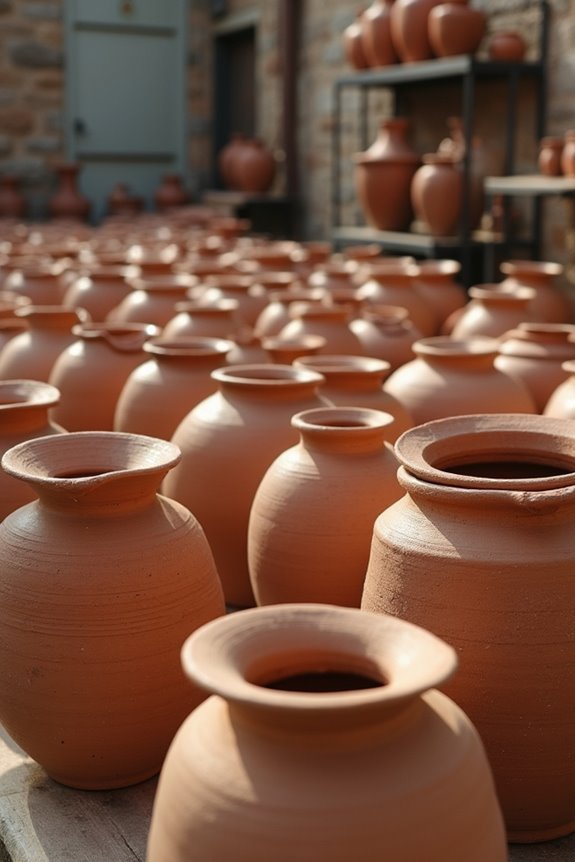
I’ve noticed that pottery and ceramics really show their differences when you look at what they’re actually made for—pottery’s all about those everyday bowls, mugs, and serving dishes that sit on your kitchen table, while ceramics stretch way beyond that into industrial stuff like heat-resistant tiles, bathroom fixtures, and even high-tech components for electronics. What’s interesting is that ceramics also include artistic sculptures and decorative pieces that aren’t meant to hold anything at all, which means the same material can go from practical to purely beautiful depending on how someone decides to use it. So when you’re trying to tell them apart, think about purpose: if it’s a functional vessel you can actually eat from or store things in, you’re likely looking at pottery, but if it’s doing something technical or hanging on a wall as art—some ceramics never see a kitchen—then you’ve stepped into the broader ceramic world.


WHAT WILL YOU RECEIVE: 12 pieces dinnerware sets includes 4 x 10.25 inch dinner plates,4 x 8.25 inch salad plates and 4 x 26 oz cereal bowls, Ideal for small families, couples, or individuals, this 4 place settings dish set is perfect for your dining needs

WHAT’S IN THE BOX: Service for 8 that includes 8 of each of the following: 10.5” Dinner Plates, 8.5” Dessert Plates, 6” Cereal bowls, 4.5” Bowls, and 4” Bowls
Functional Vessels And Containers
The everyday mug sitting on your kitchen counter—that’s where pottery and ceramics start to show their real differences. I’m talking about functional vessels here, the stuff you actually use. Pottery focuses on what I call the “everyday essentials”:
- Mugs and bowls made from clay, designed for daily drinking and eating
- Food-safe glazing that makes vessels waterproof and safe for your meals
- Handcrafted details with slips and glazes that make each piece unique
- Kiln-fired durability that turns raw clay into lasting containers
See, when you’re holding a ceramic mug, you’re holding pottery’s true strength. It’s not about looking fancy—it’s about functionality. These vessels earn their place in your kitchen because they’re built to serve you, day after day.
Industrial And Technical Applications
While everyday pottery sticks to what it does best—holding your coffee and looking nice on the shelf—ceramics have quietly become the backbone of some seriously impressive technology. I’m talking about industrial applications with significant practical value: aerospace ceramics protecting spacecraft, technical ceramics strengthening engine parts, insulators keeping electronics safe from electrical hazards. These ceramic materials handle extreme heat resistance and mechanical strength that regular pottery couldn’t match. Manufacturers produce them with precise manufacturing tolerances using large-scale production methods, not hand-throwing at a pottery wheel. Silicon carbide and alumina components power industries you probably don’t think about, from electronics to aircraft. The same material family splits into two completely different worlds: your dinner plate versus cutting-edge engineering.
Artistic And Decorative Purposes
Now here’s where things get really interesting—because once you step away from those industrial powerhouses and high-tech applications, you’ll find that pottery and ceramics split into completely different creative worlds.
Here’s what I mean:
- Pottery stays practical: bowls, mugs, and pots with food-safe glaze for your kitchen
- Ceramics go artistic: porcelain sculpture, figurines, and tiles with strong visual appeal
- Decorative ceramics celebrate pure visual appeal and craftsmanship over function
- Non-functional art objects let artists express themselves without worrying about durability
See, when you’re making a mug, you’re thinking “will this last?” But when you’re creating a glazed ceramic sculpture or designing artistic tiles, you’re thinking “what story does this tell?” That’s the beautiful difference—pottery serves your dinner, while ceramics feed your soul.
Why Heat Changes Everything: Firing and Durability
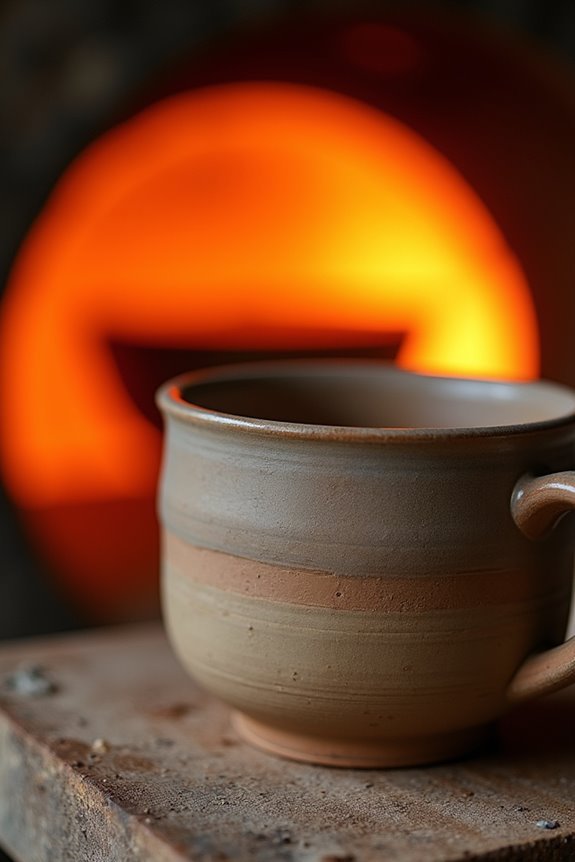
How much difference can a kiln really make? It’s everything. When you fire clay, heat drives off water and triggers vitrification—the process transforming soft clay into durable ceramic. Here’s where it gets interesting: higher temperatures mean lower porosity, so your stoneware or porcelain becomes genuinely waterproof, unlike earthenware. I’m talking cone 10 for porcelain, which achieves that translucent quality you’ve seen in fine dishes. The kiln atmosphere and glaze fusion during firing? They’re not just technical details—they actually influence how your piece resists thermal shock and handles everyday wear. Different firing ranges create wildly different results. Low-fire gives you one look; mid-range another; high-fire something entirely different. Temperature literally determines your ceramic’s personality and lifespan.

WEATERPROOF AND STURDY – These ceramic wire holders have an Bolt and Nut that is crafted from heavy-duty steel. Its head is made of porcelain so that it acts as an insulator to prevent cables from conducting electricity in an undesirable way.

Inner Diameter: 6mm / 0.24 inch; Outer Diameter: 20mm / 0.79 inch
What They Feel and Look Like: Rough vs. Smooth
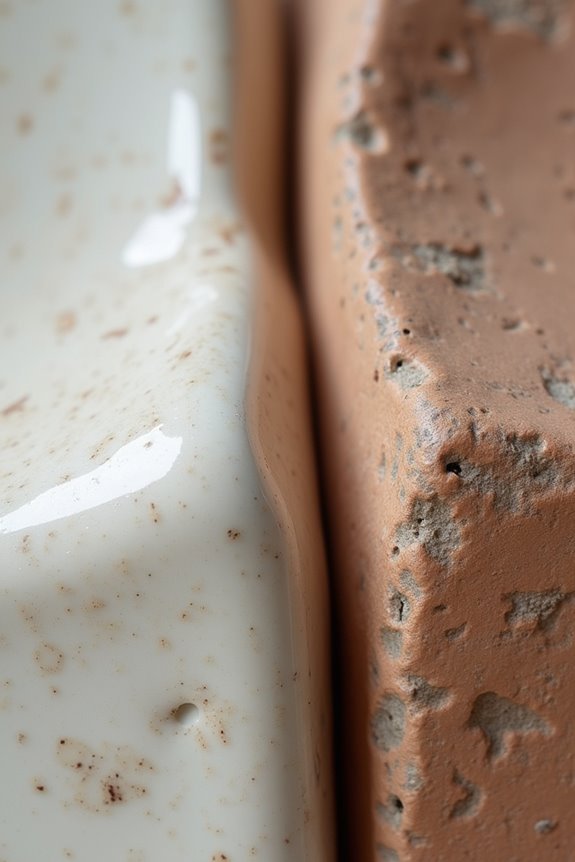
Ever run your fingers across a handmade mug and felt all those little bumps and imperfections? That’s the difference between pottery texture and ceramic finish. Here’s what sets them apart:
- Pottery feels artisanal: Handmade wheel-throwing leaves visible marks, creating a rough versus smooth tactile surface you’ll hold regularly
- Ceramics prioritize polish: Industrial pieces aim for uniformity, delivering that sleek, non-porous glaze texture consistently
- Glazing tells the story: Pottery uses matte, rustic finishes while ceramics feature glassy, vitrified surfaces
- Your hands know the difference: Pottery’s irregularities provide better grip and feel genuine; ceramics feel consistent and controlled
When you choose pottery, you’re accepting character. That roughness isn’t a flaw—it’s evidence someone made it with purpose. Ceramics deliver reliability and precision. Both feel good, just differently. Which works better for you?

Demension & Capacity:7.0''L x 4.7''W x 5.68''H, 18.6oz

【What's in the parcel?】 It includes Four(4) pieces ceramic pasta bowls. With a maximum capacity of 30 ounces, these large capacity bowls is designed for pasta and salad, and also perfect for soup, cereals and so on.
Why Handmade Pottery Costs More
That rough, handmade feel we just talked about? It comes with a price tag—and for good reason. When you buy handmade pottery, you’re investing in an artisan’s skill and time. Techniques like wheel-throwing and hand-building aren’t quick; they demand patience and precision. Add in the full production cycle—wedging clay, forming, drying, bisque firing, glazing, then a second firing—and you’re looking at serious labor and energy costs. Studio pottery makers source quality materials domestically, which costs more than mass-produced alternatives. Here’s the thing though: you’re supporting real craftsmanship and sustainable practices. Each unique piece reflects genuine artistry, no two exactly alike. That matters. You’re not just buying a bowl; you’re part of a community that values quality over cheap convenience.

Fast Color-Match Tile Repair Kit for Chips and Cracks: Seven pigments help match white, beige, gray, almond, blue, black and common tile colors for bathroom, kitchen, ceramic, porcelain and floor tile repairs

Nexus Vinyl Tiles: Refresh your home for a low cost and no hassle with the Nexus Vinyl Floor Tiles. Our tiles can be used in any room in your home including the kitchen, dining room, bedrooms, bathrooms, foyers, and basements. No messy glue or adhesives needed. Includes 20 vinyl tiles.

Nexus Tiles: Refresh your home for a low cost and no hassle with the Nexus Vinyl Floor Tiles. These tiles can be used in any room in your home from the kitchen to the bedroom. No messy glue or adhesives needed. Pro tip: Color and pattern may vary. Includes 20 vinyl tiles. Each piece features unique color and pattern variations that mimic natural marble.