
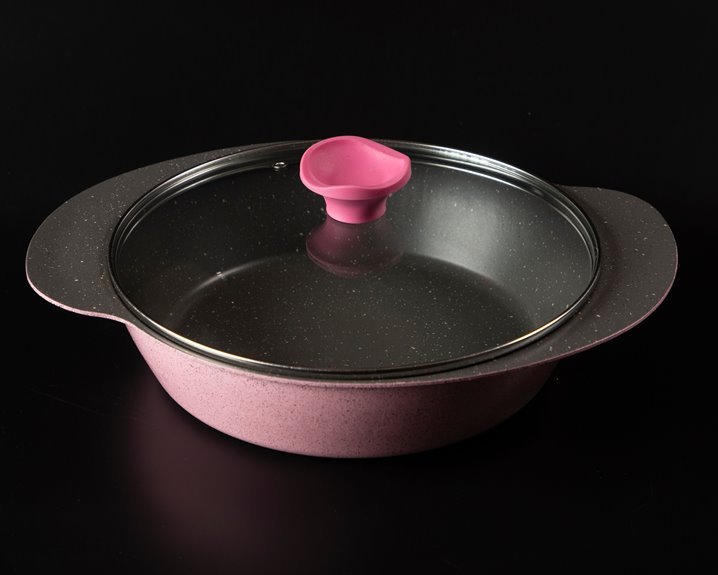
Most ceramic pans handle the oven well, but—and this matters—don’t assume everything attached to your pan plays by the same rules. The pan body typically tolerates 450–550°F, yet glass lids often max out around 425°F, and handles might tap out even lower. I’d recommend checking your specific pan’s label before you preheat anything.
The real trick is respecting those limits and avoiding sudden temperature swaps, which can crack or warp your cookware. Want to know exactly how to use yours safely?
Is Ceramic Cookware Oven-Safe?
So, can you actually pop that ceramic pan in your oven? Yes, you totally can—most ceramic cookware is oven-safe, thanks to its metal base construction. Here’s the thing though: just because the pan itself handles heat doesn’t mean everything attached to it does. You’ve got to check your lids and handles, since they’re often the weak link. Glass lids, for instance, typically max out around 425°F, which might limit your oven temperature options. The real consideration? Read your product’s specific guidelines, because cookware construction varies widely between brands. Some ceramic pans handle 600°F, while others have lower temperature limits. Don’t assume—verify those temperature limits first, and you’ll keep your kitchen safe and your pan performing well.

CERAMIC NON-STICK COATING: Our innovative cooking surface undergoes a triple-layer ceramic coating process, fortified for unmatched food release. The nonstick frying pans excels in delivering outstanding nonstick performance, enabling you to prepare your favorite dishes with less oil or butter usage

Moisture-Locking Lid: The Lodge Essential Enamel Braiser features a moisture-locking design ideal for broiling, braising, baking, or roasting

12” FRYING PAN: Perfect for slide-off-the-pan eggs, sauteing veggies, flipping pancakes and more. This durable non-stick pan makes cooking easier than ever, cleaning (dare we say) enjoyable, and adds a pop of color to any home.
What Temperature Can Ceramic Pans Handle?
What Temperature Can Ceramic Pans Handle?
Most ceramic pans handle oven temperatures between 400–550°F, though it depends on your specific brand and model. The ceramic coating is the limiting factor, so check your pan’s official maximum oven temperature before heating it up.
| Brand/Type | Pan Rating | Lid Rating | Notes |
|---|---|---|---|
| CeramiClad™ | 550°F | Lower | Avoid above 500°F |
| GreenPan | Up to 600°F | Check specs | Handles vary |
| Generic ceramic | 400–500°F | ~425°F | Verify your model |
| Standard glass lids | N/A | 425°F | Often the weak link |
Don’t assume your entire setup matches—lids frequently have lower limits than the pan itself, so verify everything before use.

UNIVERSAL COMPATIBILITY – Perfectly fits 10-10.25" Lodge skillets (L8SK3/L8GP3), 5QT Dutch ovens (L8DO3/L8DOL3), Ninja pans, cast iron cookware & most 10.25-inch pots/woks. Confirm size before purchase!
12 Inch Lid:The Pot lid is made of tempered glass and features a steam vent for your quality cooking. The rim and handle are sturdy stainless steel and can be used on a stainless steel inner pot up to 220C/428F in the oven.

【Upgraded Quality Range Oven Door Glass】ARLBA WB56T10187 Range Oven Door Glass Dimensions::29.3"x21.5".it is 3 mm thick glass. it is made with high-quality tempered glass, it is Durability, heat-resistant, and long-lasting, offering reliable performance.Its advanced design ensures thermal shock resistance and a flawless finish. ARLBA oven door glass has a smooth non-porous surface that resists grease and stains, making cleaning and upkeep easy even with frequent use
Do Ceramic Coatings Hold Up in High Heat?
When you’re wondering whether that ceramic pan’ll actually survive your 500°F oven, here’s the good news: ceramic coatings are durable. I’ve found that ceramic coating holds up well under oven heat tolerance up to about 500–550°F, depending on your specific pan. The real trick, though, isn’t just the coating itself—it’s your entire oven-safe construction, meaning the metal base and handles matter just as much. To keep things running smoothly, I always preheat gradually and avoid thermal shock, which is that sudden temperature change that can damage the coating’s integrity. Check your product’s maximum temperature rating first, because sometimes lids or handles have lower heat limits, no, really. Making smart choices now means your ceramic cookware stays reliable for years.
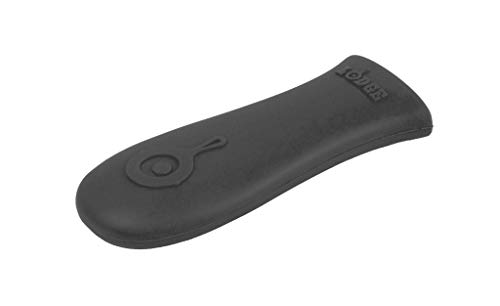
Reliable Heat Resistance: Designed for skillets 9 inches and larger, the Lodge Silicone Hot Handle Holder delivers a secure grip on hot cookware with heat resistance up to 500°F

Application: Suitable for most single-hole stockpot, pressure pot, steamer, side handle, double-hole, three-hole pot can not be applied, you only need to replace the handle without buying new POTS and pans, save money for you, is a practical cookware accessories.

Reliable Heat Resistance: Designed for skillets 9 inches and larger, the Lodge Silicone Hot Handle Holder delivers a secure grip on hot cookware with heat resistance up to 500°F
Why Your Pan’s Design Matters for the Oven
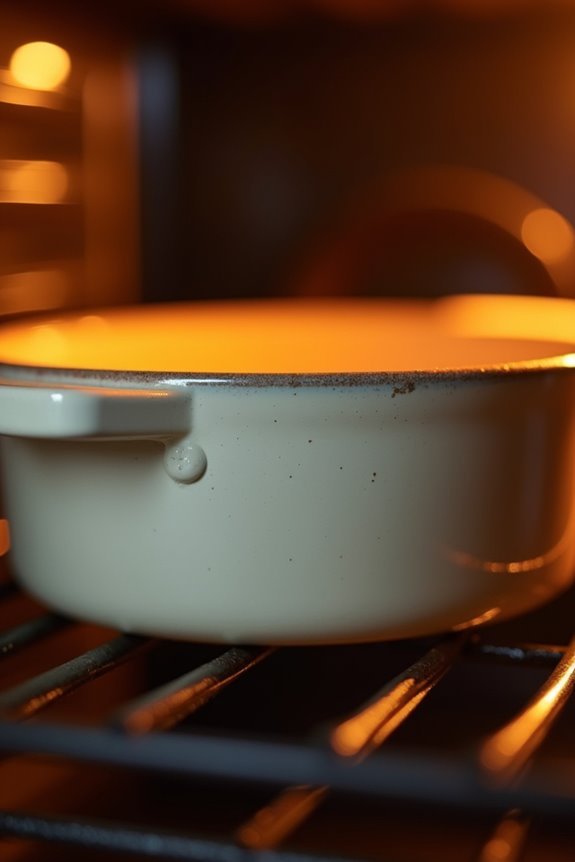
Because a ceramic coating’s only one piece of the puzzle, the whole pan’s construction—from the metal base to the handles—actually determines whether it’ll survive your oven. You see, many ceramic nonstick pans use aluminum or stainless steel bases that affect how heat spreads and how your pan performs at higher temperatures. The metal base matters; it’s what really handles the oven safety challenge, not just the coating alone. Brands like GreenPan specify their temperature rating—often around 500–600°F for the pan itself, though handles or lids might have lower limits. That’s why checking your manufacturer’s guidelines is important. Every component counts when you’re deciding if your favorite pan can actually make the oven trip.
Ideal for use on automotive parts and surfaces subject to intermittent high heat up to 2000°F


Ideal for use on automotive parts and surfaces subject to intermittent high heat up to 2000°F
Checking Your Pan’s Oven Rating Before Use
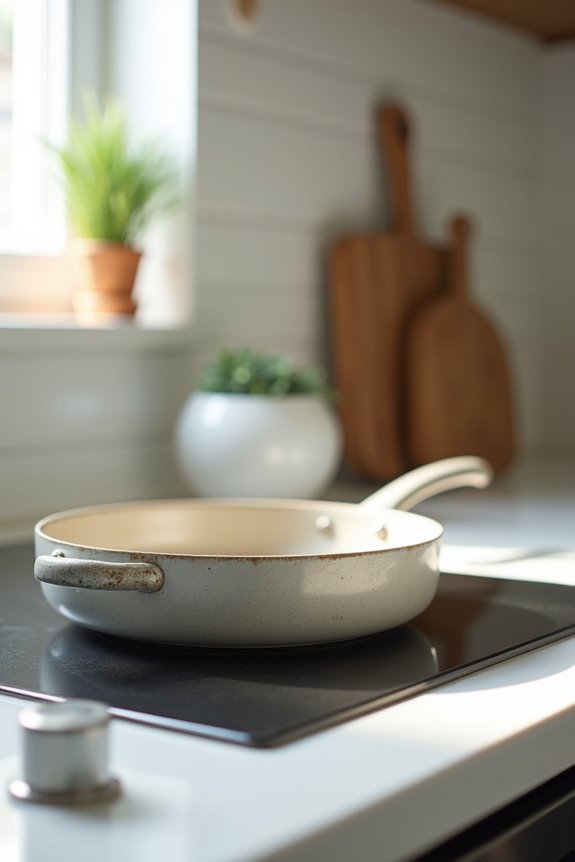
Before you slide that ceramic pan into your oven, you need to know its temperature limit—the actual one, not a guess. Check the manufacturer guidance on the packaging or manual. Your ceramic cookware might handle 450°F, but the lid or handle could have a lower limit at 350°F—and that’s the number that matters.
| Component | Typical Rating | What This Means |
|---|---|---|
| Pan body | 450–550°F | Usually the strongest part |
| Silicone handles | 300–350°F | Often the weak link |
| Glass lid | 300–400°F | Check separately—verify this |
| Entire set together | Lowest rated piece | Your actual oven-safe limit |
When in doubt, follow what the maker says. Your ceramic cookware deserves proper care, and you deserve to know it will perform safely.

DIAMOND-TOUGH EXCELLENCE: Metal utensil safe surface with diamond-infused ceramic nonstick - 5x harder and 10x longer lasting than traditional coatings. Tough enough for your toughest recipes!

LONG-LASTING NONSTICK PERFORMANCE: Exclusive Titanium-infused ceramic coating. 10-year nonstick guarantee. 3x more scrub resistant* to withstand harsh brushes and sponges *vs Caraway ceramic coated cookware.

Eco-friendly Classic Granite – Non-stick Granite Material, PFOS,PFOA free, our cookware ensures your daily cooking is always safer and healthier.
Moving Ceramic Pans From Stovetop to Oven
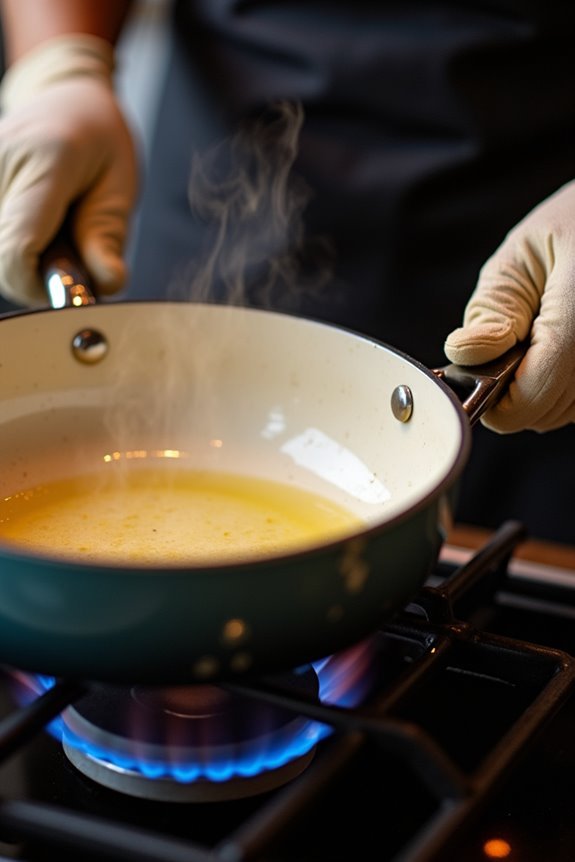
Now that you’ve confirmed your ceramic pan can handle oven heat, it’s time to actually move it from the stovetop to your oven—and I’ll be honest, how you do this matters more than you might think. The key is avoiding thermal shock, which happens when temperatures change too fast and can warp your pan. Here’s what I do: I preheat my oven first, then carefully transfer my preheating pan using oven mitts. Never—and I mean never—plunge a cold pan into a hot oven or vice versa. Before moving anything, double-check those oven temperature limits on your product guidelines. Pay special attention to handles and lids, since they sometimes have lower limits than the pan itself. This simple prep work keeps your ceramic cookware safe and ready for whatever you’re cooking.

COMPACT 2-IN-1 DESIGN: A small, but mighty ceramimc griddle pan that works as a nonstick sheet pan in the oven and a griddle pan for stove top cooking on a single burner.

LARGE FRYING PAN: 5 Quart(11") Capacity.This deep saute pan is great for cooking large meals or batch cooking

All of the Flavor, None of the Sticky Mess: Seeking truly nonstick cast iron cookware? Try this braiser pan. The cast iron heats & cooks evenly while the smooth enamel coating resists sticking.
Keeping Handles and Lids Safe
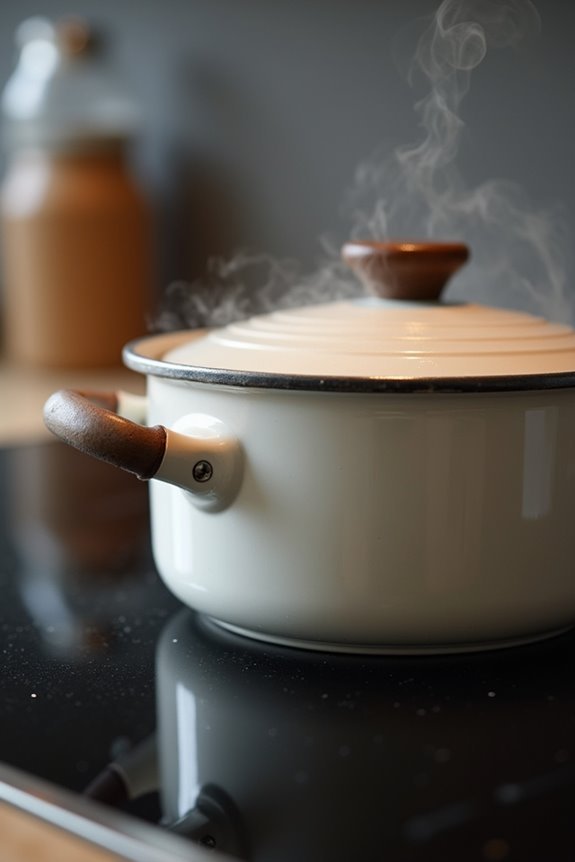
One thing I’ve learned the hard way is that your ceramic pan’s handles and lids deserve just as much attention as the pan itself—maybe even more, honestly. You see, even if your pan is totally oven-safe, those handles and lids have their own temperature limits that you need to respect. I always check the manufacturer’s guidelines first because a melted handle isn’t fun to deal with. Glass lids especially tend to have lower heat ratings, so I often remove mine before oven use. Here’s my approach: preheat your oven, which sounds counterintuitive, but it actually reduces thermal shock on handles. Verify those temperature limits, follow product-specific instructions carefully, and you’ll keep everything protected and functional for years.

SUPERIOR HEAT RETENTION & EVEN COOKING – Heavy-duty cast iron construction delivers exceptional heat retention and even heat distribution for consistent cooking results, from slow-simmered stews to perfectly roasted meals.
8 Inch Lid:The Pot lid is made of tempered glass and features a steam vent for your quality cooking. The rim and handle are sturdy stainless steel and can be used on a stainless steel inner pot up to 220C/428F in the oven.

Save Time and Money – Whether you want to save time and money or just prefer home cooking over fast food, PrepNaturals glass food storage containers set is perfect for you. Durable and easy to use, these glass containers encourage you to cook at home and eat healthier food.
How to Avoid Thermal Shock
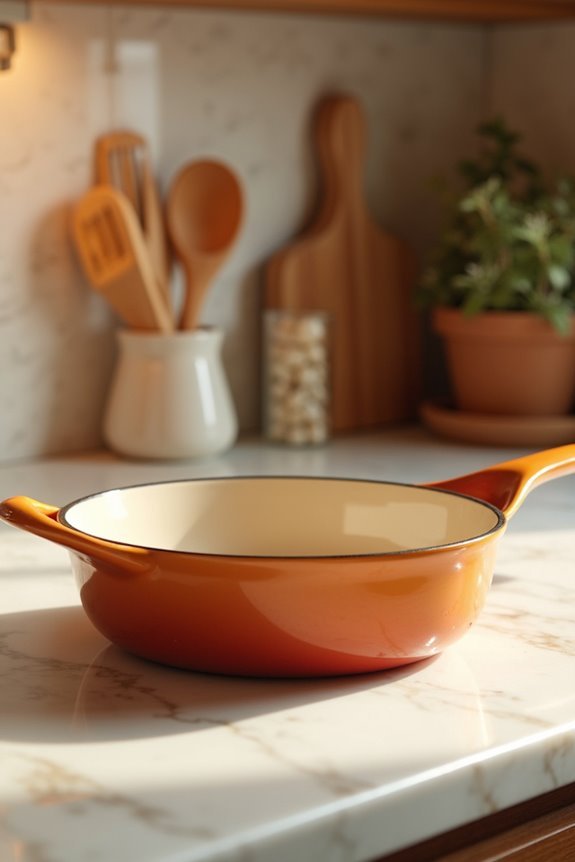
Thermal shock happens when your ceramic pan experiences sudden temperature swings, and the best defense is keeping things gradual—think of it like easing into a cold pool instead of cannonballing in. When you’re preheating, start with low-to-moderate temperatures and let your pan warm up slowly on the stove before transferring it to the oven, and when you’re done cooking, resist the urge to run it under cold water (no, really, I know it’s tempting) because that rapid cooling can actually crack your ceramic. The key principle is patience: let your pan cool to room temperature naturally before washing, avoid pouring cold liquids into hot ceramic, and always check your manufacturer’s instructions before putting any cookware in the oven.

High-Quality Materials: Our cookware and frying pan replacement handles are made of durable ABS and stainless steel, capable of withstanding high temperatures, ensuring kitchen safety and longevity.

Material: Heat-resistant Bakelite. High temperature resistant, corrosion resistant, safe and durable.

Heat protecting silicone pot handle covers which come in one pair (2 pcs) are available in three beautiful retro colors (Soy Green, Cream, Cinnamon). Its smooth, simple design and calming colors complement any kitchen or kitchenware. Measures 3.1" x 1.6" x 1.3"
Gradual Temperature Transitions
Why do ceramic pans sometimes crack or warp when you use them? It’s all about gradual temperature transitions. When you skip straight from your fridge to a hot oven, you’re basically shocking your pan—and it doesn’t appreciate that. Here’s what happens: start your oven-safe ceramic pan on low heat first, then let it warm up for a few minutes before increasing the temperature. Think of it like easing into a swimming pool instead of jumping in abruptly. This gradual preheating prevents thermal shock, which is that stress that causes cracking. After cooking, don’t cool it suddenly either—just let your pan cool at room temperature. These gentle temperature transitions help keep your ceramic cookware in good condition and crack-free for years.
Preheating and Cooling Practices
How’d you like it if someone yanked you from a freezer and tossed you into an oven? Your ceramic pan feels the same way. I’m telling you, thermal shock—that’s when temperature changes too fast—can crack your cookware. Here’s what I do: I preheat my pan gradually on low to medium heat for about 5 minutes, letting the heat spread evenly before the oven. After cooking, I let it cool naturally at room temperature instead of dunking it in cold water (no, really, that’s asking for trouble).
| Step | Best Practice |
|---|---|
| Before | Preheat gradually, 5 minutes |
| During | Don’t exceed max temps |
| After | Cool slowly at room temp |
This practice protects your investment and keeps your pan safe for years to come.
Mistakes That Damage Ceramic Pans
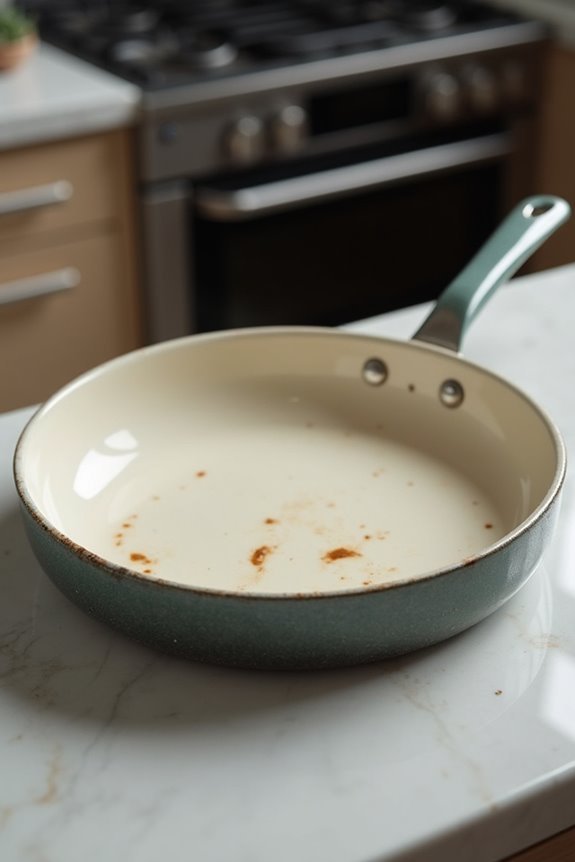
Once you’ve got yourself a ceramic pan, it’s easy to think you can treat it like any other cookware—but that’s where things can go wrong pretty quickly. I’ve learned the hard way that thermal shock—sudden temperature swings—can warp or crack your pan, so avoid moving it from hot to cold too fast. Metal utensils? They’re actually the enemy of your coating durability, scratching away that nonstick surface you love. Stick with wooden or silicone instead. Skip the dishwasher and harsh scrubbers, which dull the finish faster than you’d think. And here are the key cautions: respect your manufacturer’s temperature limits for oven safety; exceeding them damages the coating and voids your warranty. These habits matter.

HIGH HEAT PROTECTIVE SPRAY PAINT: Ideal for use on automotive parts and surfaces subject to intermittent high heat up to 2000°F

Flame proof coating extends life of high heat surfaces

AUTOMOTIVE SPRAY PAINT – Dupli-Color Engine Enamel is a high-quality vehicle paint that contains Ceramic resins for maximum heat dissipation and gloss retention. The resins offer protection from exposure to excessive heat and automotive fluids.
Making Your Ceramic Pan Last
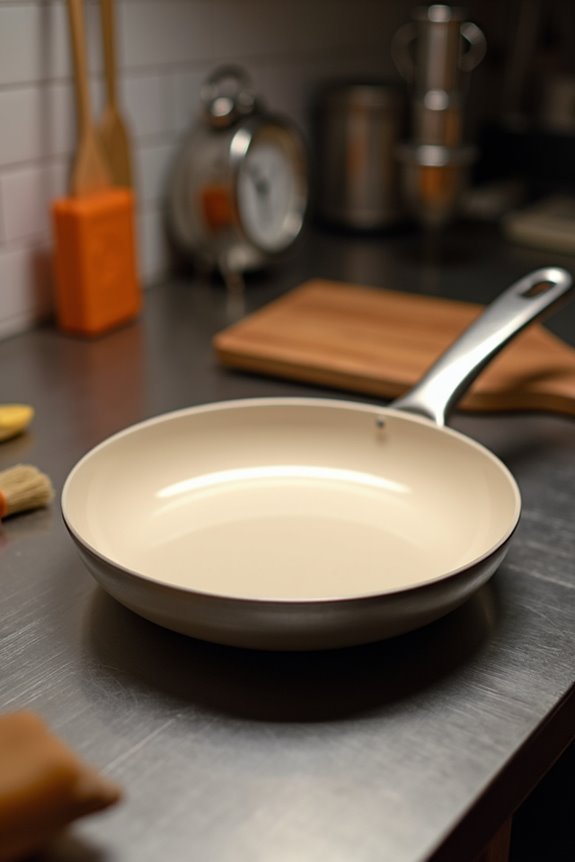
To keep your ceramic pan in great shape for years, proper cleaning and smart storage really help—hand washing with soft sponges and mild soap beats the dishwasher, and skipping metal scrubbers protects that nonstick coating. When you’re tucking your pan away, stack it with soft cloth or paper between it and other cookware. This simple step prevents scratches and keeps the surface smooth. With just these two habits—gentle cleaning and protective storage—your ceramic pan will stay as reliable as the day you brought it home.

ETCHED HYBRID SURFACE: Experience the perfect marriage of stainless steel durability and non-stick ease. Our etched hybrid surface allows you to sear meats to golden perfection while still releasing delicate foods like eggs and fish effortlessly—no more stuck-on mess.

DIAMOND-TOUGH EXCELLENCE: Metal utensil safe surface with diamond-infused ceramic nonstick - 5x harder and 10x longer lasting than traditional coatings. Tough enough for your toughest recipes!

LONG-LASTING NONSTICK PERFORMANCE: Exclusive Titanium-infused ceramic coating. 10-year nonstick guarantee. 3x more scrub resistant* to withstand harsh brushes and sponges *vs Caraway ceramic coated cookware.
Proper Cleaning Techniques
Why does your ceramic pan deserve a little extra care after cooking? Because you’re protecting your investment—and honestly, it’s easier than you’d think. Proper cleaning keeps your nonstick coating performing well for years.
Here’s what I do to maintain mine:
- Hand wash with warm, soapy water and a soft sponge (dishwashers are a no-go)
- Let the pan cool completely before cleaning to prevent warping
- Soak stuck-on bits for 15–30 minutes or use a baking soda paste
- Dry thoroughly and store with a towel or protector between pieces
- Refresh the nonstick surface monthly with a gentle baking soda treatment
These habits work. Your ceramic pan—whether you’re using it stovetop or oven—will perform reliably when you care for it properly.
Storage and Protection Methods
Now that you’ve mastered the cleaning routine, let’s talk about what happens when your ceramic pan isn’t busy cooking—because storage matters just as much as what you do at the stove. I’ve learned that protecting cookware between uses extends its lifespan.
Here’s my approach: I always place a soft towel or trivet between stacked pans to prevent scratches. Before storing, I let mine cool completely to room temperature, avoiding thermal shock that damages the surface. For ceramic cookware storage, I use an upright organizer instead of nesting everything together—no, really, it saves space while keeping contact minimal. I keep my Beechwood utensils separate too. This nesting and organization strategy means my pans stay in good condition longer, and honestly, it’s easier than dealing with repairs later.
Best Dishes to Cook in Ceramic Pans in the Oven
Once you’ve got an oven-safe ceramic pan in your kitchen, you’ll wonder how you ever cooked without one—seriously! I’m talking about dishes that make your home smell remarkable and taste even better. Since ceramic pans handle oven temperatures beautifully (just respect those temperature limits!), you’ve got serious cooking flexibility now.
An oven-safe ceramic pan transforms your cooking with remarkable flavors and serious kitchen flexibility.
Here’s what I love making in mine:
- Stews that simmer from stovetop to oven, deepening their flavors
- Braises with tender meat that falls apart perfectly
- Frittatas that cook evenly without hot spots
- Baked pasta dishes with golden, bubbly cheese tops
- One-pan roasted vegetables with herbs and garlic
The trick? Preheat your pan, respect its heat rating, and you’re golden. No, really—these dishes develop rich, complex flavors when you bring that sizzle from the stove straight into your oven.