Yes, you can safely use ceramic bowls in your air fryer—but you need to pick the right ones. Look for high-fired ceramics (like stoneware or reinforced porcelain) with an oven-safe label and intact glaze, no cracks or metal decorations. The bowl needs to fit comfortably with breathing room for air circulation.
Avoid thermal shock by not dropping a cold bowl into a preheated fryer, and let it cool naturally afterward.
Get these details right, and your air fryer cooking will work well—though there’s plenty more to know about selecting and using them properly.
What Makes a Ceramic Bowl Safe for Air Fryers?
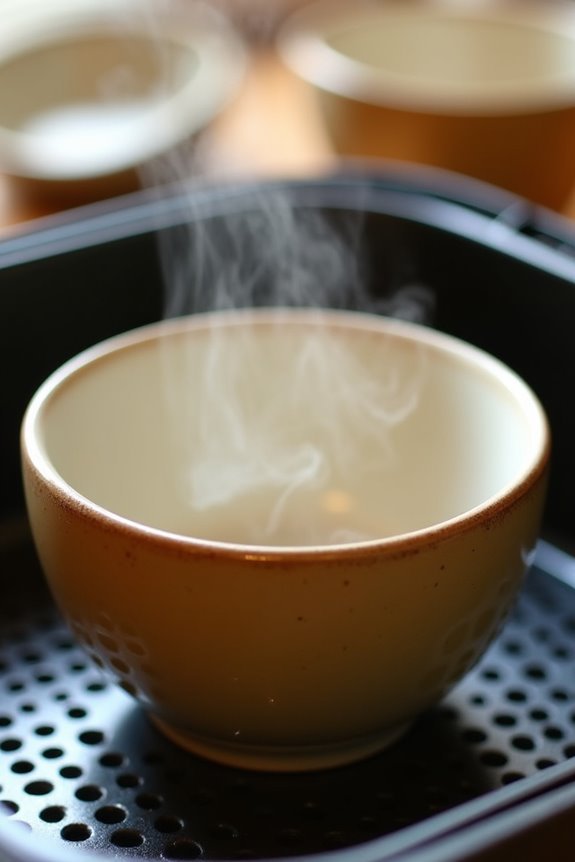
So, what’s the real difference between a ceramic bowl you can toss in your air fryer and one that’ll crack the moment it hits the heat? The answer lies in high-temperature fired ceramics—think reinforced porcelain or stoneware, not your grandma’s decorative dishes. You’ll want bowls explicitly marked oven-safe and heat-resistant, which means they’re built to handle your air fryer’s intense temperatures (usually 160–200°C). Check that the glaze integrity is flawless—no cracks, no gold or silver decorations that’ll flake off. Proper fit matters too; your bowl needs breathing room inside the basket for air circulation. Avoid thermal shock by gradually heating cold bowls rather than dropping them into preheated air. When you choose wisely, ceramic becomes your reliable kitchen ally.
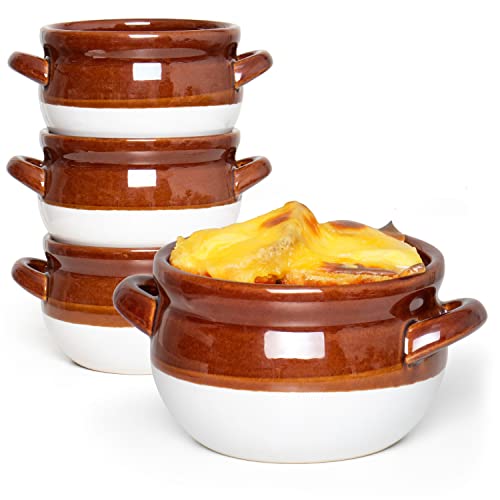
★FOOD-GRADE MATERIAL: The French onion soup bowls are made of high-quality ceramic, which can withstand higher temperatures. No peculiar smell and safe to use. The excellent coated glaze does not fade and protect it not easy todirty.

Casseroles, Crisps & More: Perfect for cooking up personal pot pies, stews, pastas, and we especially love using them to serve fruit crumbles.

🔸Multi-Functional Large Soup Bowls: With a capacity of 16 oz, our single-handled soup bowl are perfect for different types of food, ranging from french onion soup, beef stew, bouillon, seafood bisque, chowder, lobster bisque, shepherd pie, cheese soup and more. Get creative and explore various culinary possibilities with our versatile bowl set.
How to Check if Your Bowl Is Air Fryer Ready?
Before you place that ceramic bowl into your air fryer, you’ll want to do a quick check—and it’s straightforward. First, flip that bowl over and look for oven-safe or heat-resistant labels, which indicate it’s air fryer ready. Next, check if it’s high-temperature fired ceramic like stoneware or reinforced porcelain, not decorative pottery that’ll crack under heat. Inspect the glaze carefully—no cracks, chips, or metal decorations allowed. Then, measure your bowl against your air fryer basket; it needs breathing room without touching walls. Finally, find manufacturer guidance about temperature tolerance, usually around 150–200°C. When you’ve checked these boxes, you’re ready to cook.

Fits Select Nexgrill Models – Designed for Nexgrill 720-0830H, 720-0888N, 720-0888S, 720-0830D, 720-0697, 720-0737 and 720-0825 gas grills. Please measure your current heat plates before ordering.

12-piece set of 12 ounce premium porcelain coffee mugs for food service including restaurants, catering, parties, and everyday use

Size: 9.6 x 2.0 inches (24.5 x
Which Ceramic Bowls Should You Avoid?
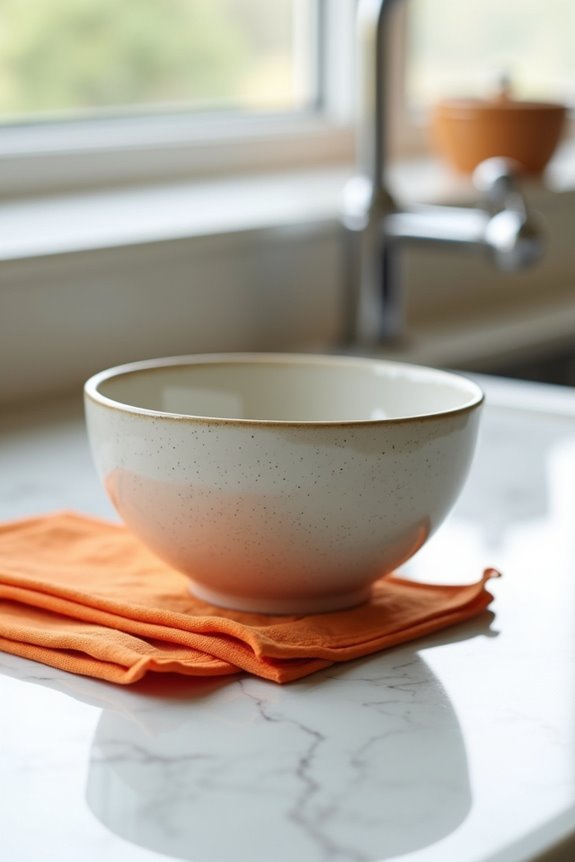
I’d steer clear of low-temperature fired pottery and decorative ceramics, since they’ll crack or shatter when your air fryer hits those high temperatures (no, really—it happens fast). If your bowl’s already got chips, cracks, or damage, skip it entirely; that damage weakens the material and can cause pieces to break off into your food, which is definitely not what you want. The safest approach is checking that your bowl’s actually labeled as oven-safe or heat-resistant before you use it, because an unmarked ceramic bowl might not handle the intense heat and air circulation your air fryer throws at it.

TRUE VISIBILITY, ZERO GUESSWORK: Watch your food cook in real time, without opening the basket and losing heat. Unlike typical air fryers, this glass air fryer features a clear cooking basket, top viewing window, and interior light.

Versatile Kitchen Tool: The Hot Plate Gripper is designed for multi-functional use across various kitchen appliances. Its flat gripping head allows insertion into narrow spaces around rims, enabling safe lifting of hot bowls, plates, and inner pots from Instant Pots, microwaves, and air fryers. The tool serves as a stabilizing aid when stirring in pots, and effectively handles springform pans, cookie trays, glassware, and basket trays

Quality Ceramic Material: experience reliable and phenomenal heat resistance with these ceramic square bowls; Crafted from porcelain, they are recognized for their ability to withstand high temperatures; This ensures your food bakes evenly and comes out every time
Low-Temperature Fired Pottery
Decorative pottery and craft ceramics—those handmade pieces or delicate decorative bowls—aren’t your air fryer’s friends, and here’s why: they’re fired at lower temperatures than their heat-resistant cousins, which means they’ve got weaker structures that can’t handle the intense, circulating heat your air fryer throws at them.
- Thermal shock risk: Low-temperature fired pottery lacks the heat resistance needed for air fryer use, making shattering a real possibility
- Glaze concerns: Unknown ceramic glaze safety means potential toxin release when exposed to 160–220°C temperatures
- Structural weakness: These pieces weren’t made to withstand rapid temperature changes or airflow stress
- Unknown origin: Without explicit oven-safe labeling, you can’t guarantee performance under air fryer conditions
Use high-fired ceramics instead—your meal prep and safety will benefit from it.
Damaged Or Cracked Ceramics
When’s the last time you actually inspected a ceramic bowl before tossing it in your air fryer? Yeah, I know—it’s easy to skip that step. But that said: damaged bowls are risky in there. Cracked ceramics and hairline cracks weaken the structure, making ceramic shattering way more likely under high-heat exposure. Glaze crazing (those tiny lines on the surface, no, really) can release flake fragments into your food when heated. Unknown origin ceramic bowls especially worry me because they’ve skipped proper safety testing for air fryer use. Before using any bowl, grab it, turn it over, and check carefully for chips, cracks, or crazing patterns. Taking thirty seconds prevents disaster and keeps your meals safe.
Why High-Temperature Ceramics Are Safe
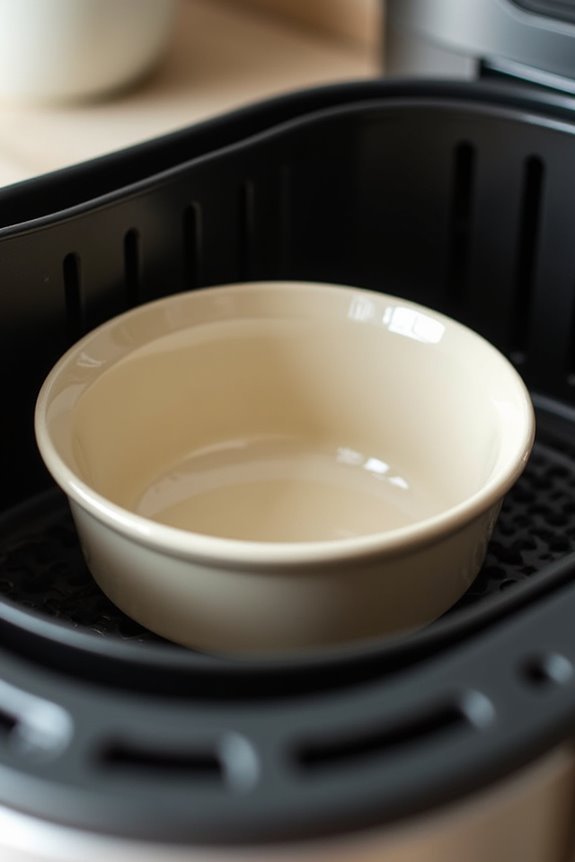
How’d you like to know a secret? High-temperature ceramics work well in your air fryer. Here’s why I’m confident about using them:
- Fired at temperatures up to 1,300°C, they handle your air fryer’s 160–200°C heat without issue
- Materials like reinforced porcelain, stoneware, and bone china get stronger under stress
- Glaze integrity stays intact, preventing cracks and leaching into your food
- No thermal shock occurs because these ceramics handle temperature changes effectively
When I choose a bowl, I look for that “oven-safe” label—it matters. Skip anything with metal decorations or electroplating; they’re trouble. High-temperature ceramics offer durability and safety. Your air fryer meals deserve bowls that won’t fail mid-cook.
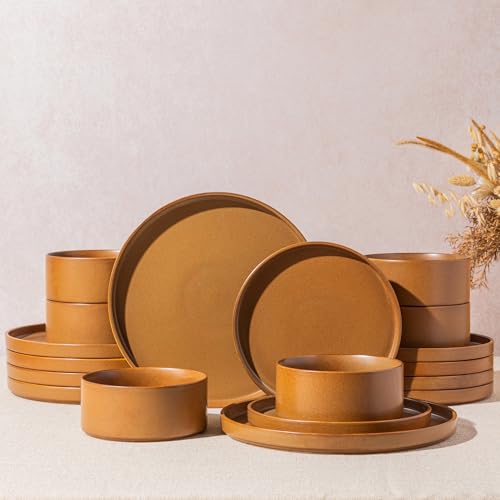
【WHAT YOU WILL RECEIVE】 This 18-piece dinnerware set includes 6 x 10.5-inch dinner plates, 6 x 8.25-inch salad plates, and 6 x 24 oz cereal bowls. Ideal for small families, couples, or individuals, this set perfectly meets all your dining needs with four complete place settings.
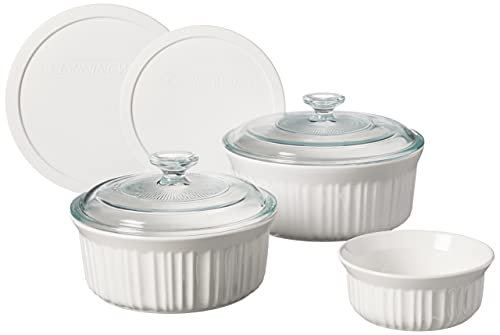
7-PIECE: Includes (1) 2.5-qt round casserole with glass and plastic lids, (1) 1.5-qt round casserole with glass and plastic lids, and (1) 16-oz round casserole.

Okllen Korean ceramic bowl overall size, 9.8"Dx5.1"H, holding up to 54 oz, ideal size for cooking traditional dishes like dolsot bibimbap, ramen, casseroles, stews, and soups. Keeps food hot and sizzling for maximum flavor.
Precautions: Before You Start
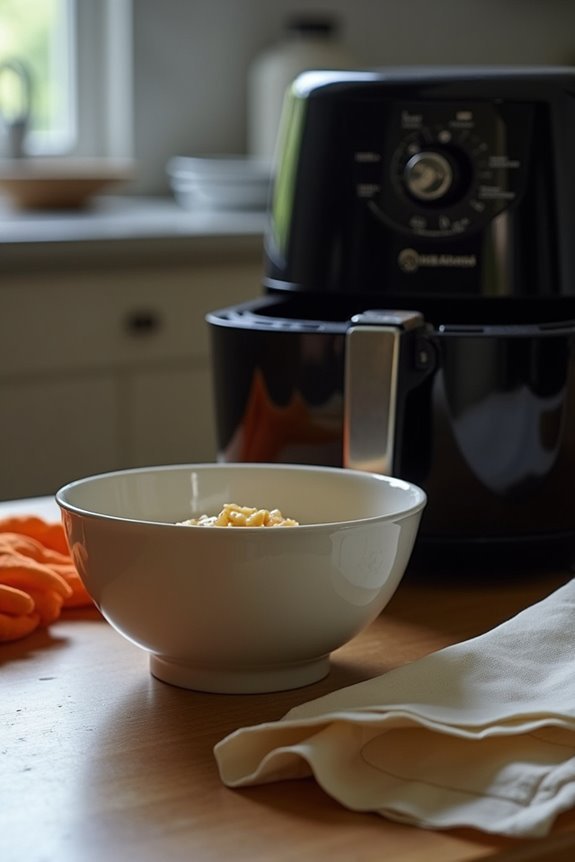
So you’ve got your high-temperature ceramic bowl ready to go—but wait, there’s an important step I need to walk you through before you toss it in. First, never place a cold ceramic bowl into your preheated air fryer; thermal shock will crack it faster than you’d think. Instead, let everything reach the same temperature together. Next, position your bowl dead center in the basket, keeping it away from heating elements to prevent direct heat contact. Make sure it fits snugly without touching the walls—this allows proper air circulation around it, which is necessary for air fryer safety. Leave any vents open; sealed containers trap rapidly heated air and create dangerous pressure buildup. Finally, after cooking ends, let your bowl cool naturally before cleaning. Rushing temperature changes damages the glaze, no, really.
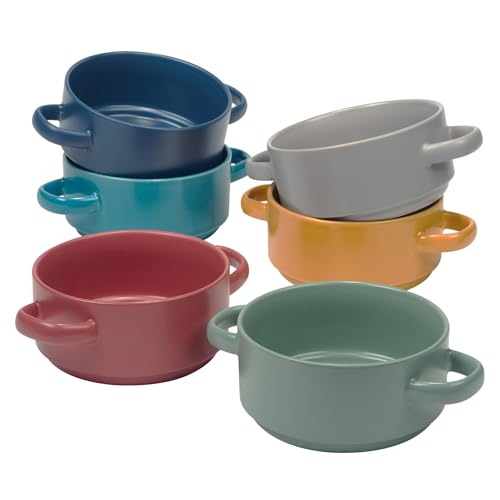
22 oz. Capacity for Holiday Servings: Generous size allows for hearty servings of soups, casseroles, and more, ideal for holiday feasts. These crocks are perfect for family dinners, ensuring everyone is satisfied without constant refills.

24 oz. Large Capacity Stoneware Soup Crocks: Each crock holds up to 24 oz., ideal for serving soups, stews, and casseroles. The ample capacity makes it perfect for family dinners, reducing the need for constant refills.

Great Value 12-Piece Set:This 12-piece stoneware dinnerware set includes 4 dinner plates (10.5"), 4 salad plates (8.5"), and 4 deep bowls (16 oz) — perfect for daily family meals or entertaining guests.
Using Ceramic Bowls: Step-by-Step
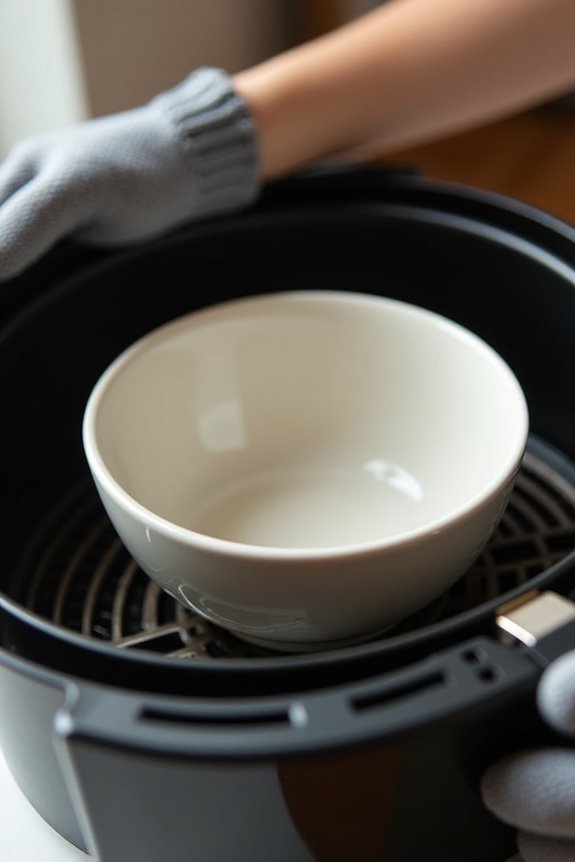
Now that you’ve picked the right bowl, I’m going to walk you through the actual steps—preparation, placement, and handling—that’ll keep your ceramic bowl (and your fingers) safe in that hot air fryer basket. You’ll want to know how to prep your bowl before it hits the heat, where exactly it should sit inside the basket so air can flow properly around your food, and the smartest ways to handle it once things get hot. Let’s break down each of these pieces so you can use your ceramic bowl with confidence.

2-SPEED CONTROL: Equipped with a Smart IC Chip, the electric grill brush offers 2 adjustable speed modes(300RPM, 500RPM) to handle light to heavy grime.

The porcelain is tough and heat resistant without cracking, and can be used in microwave, oven and other appliances.

NON-SLIP HANDLE — Ergonomically designed handle provides a comfortable, secure grip for confident use at the stove — a versatile Kitchen Scraper built to last in any kitchen — this premium Food Scraper is engineered for daily use.
Preparation And Preheating
Before you toss that ceramic bowl into your air fryer, here’s the thing—prepping it correctly actually impacts whether you’ll have a smooth cooking experience or a cracked dish disaster. I’ve learned that preparation and preheating are your best friends when it comes to safety guidelines.
Here’s what I do every time:
- Check for the oven-safe label before touching anything
- Preheat your air fryer with the ceramic bowl already inside to prevent temperature shock
- Avoid cold bowls in hot machines—thermal expansion causes cracks, no, really
- Ensure your heat resistant bowl fits loosely without touching walls
The key? Gradual temperature increases when testing new pieces. By preheating together, you’re giving your ceramic bowl time to adjust slowly. This simple step protects your investment and keeps your cooking safe.
Placement And Air Circulation
Once you’ve prepped your ceramic bowl and warmed up your air fryer, placement becomes your next consideration—and where you put that bowl affects your results. Center it right in the basket, keeping it away from the heating element and walls, which lets hot air flow freely around everything. Check that your ceramic bowl fits without touching anything or blocking the fan; unobstructed ventilation gaps are what keep your food cooking evenly. Think of it like giving that hot air room to work properly. Leave space between your bowl and the basket sides—this matters because blocked air circulation leads to uneven cooking and potential cracking from heat stress. Proper placement protects your bowl while delivering better results.
Handling And Safety Precautions
How’s your ceramic bowl looking—does it pass the safety test? I’m sharing what I’ve learned about handling ceramic bowls in your air fryer safely, because we all want to cook without worry.
Here’s what I do before each use:
- Check for cracks or chips on the bowl’s surface and avoid any with metal decorations or decals that could release toxins
- Verify the oven-safe label to confirm proper heat resistance for air fryer temperatures
- Preheat your bowl gradually alongside the air fryer to prevent temperature shock and cracking
- Let it cool on its own after cooking instead of shocking it with cold water
I’ve found that respecting these precautions makes air fryer cooking into something reliable and worry-free. Your ceramic bowl becomes a dependable kitchen companion, not a concern.
Mistakes That Ruin Ceramic Bowls in Air Fryers
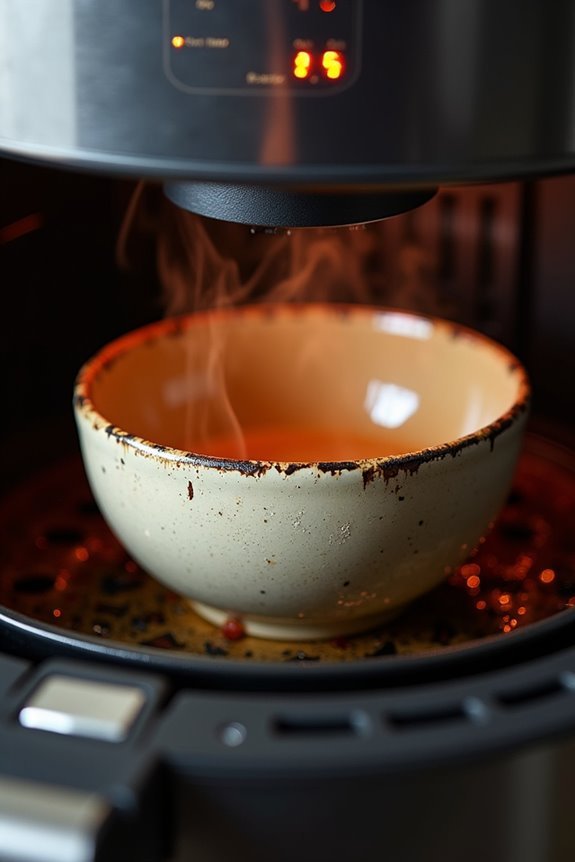
Even though ceramic bowls seem like a safe, convenient option for air frying, it’s easy to make mistakes that’ll crack, damage, or ruin them faster than you’d think. Thermal shock—dropping a cold bowl into a preheated air fryer—causes sudden cracking. Temperature matters too; low-fired pottery releases toxins or suffers glaze damage when heated. You’ll want to skip bowls with metal edges, electroplated decorations, or cracked surfaces entirely (no, really). Ill-fitting bowls block airflow and touch heating elements, causing uneven cooking and safety hazards. Here’s the thing: not confirming heat resistance beforehand guarantees trouble. Check your bowl’s label, know its firing temperature, and never assume oven-safe means air fryer-safe. These small checks prevent expensive ceramic losses and keep your air fryer running smoothly.

High Temperature Resistance: Salad serving bowl designed as a glass baking dish for oven use, this high temperature resistant glass disc withstands heat up to oven standards, making it ideal for baking, steaming, and cooking various dishes in your air fryer or conventional oven


【Lock Liners & Prevent Burning】 Specially designed magnetic buckles securely anchor your parchment paper liners, preventing them from lifting into the heating element. This ensures even cooking and significantly reduces the risk of fire hazards, offering reliable safety.
What to Look for When Buying Air Fryer–Safe Bowls
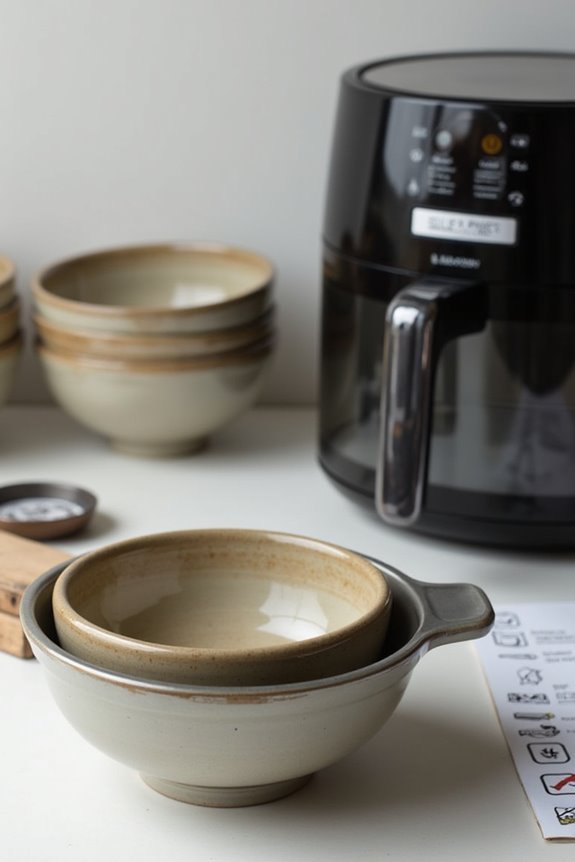
- Oven-safe labels that explicitly say heat-resistant or air fryer-safe
- High-fired ceramic without visible glaze cracks or chips that could fail under heat
- Zero metal decorations—no trim, no electroplating, nothing shiny that’ll cause trouble
- FDA/LFGB compliance stamps proving the bowl meets safety standards
I also check that the bowl fits comfortably in my air fryer basket with breathing room for hot air circulation. Size matters, honestly. Finding the right ceramic bowl means you’re using your air fryer properly.

Versatile Size: Deep and classic soft white 22 OZ bowls (20oz normal capacity) set are perfect for cereal, soup, nuts, salad, fruit, rice, and noodle without spillage. Ideal for family dinners, food storage, breakfast oatmeal, restaurant service, parties, and holiday gifts.
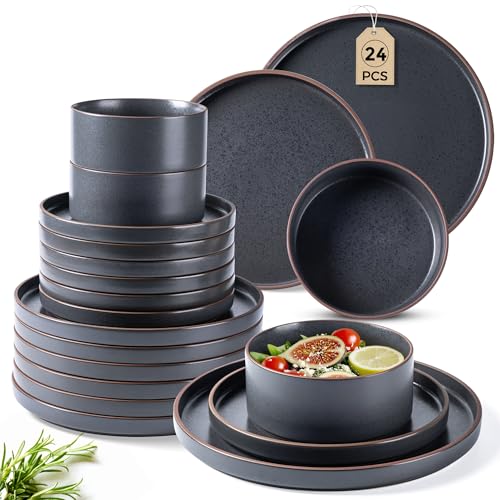
【WHAT YOU WILL RECEIVE】 This 24-piece dinnerware set includes 8 x 10.5-inch dinner plates, 8 x 8.25-inch salad plates, and 8 x 24 oz cereal bowls. Ideal for small families, couples, or individuals, this set perfectly meets all your dining needs with four complete place settings.

Versatility in Three Sizes: Includes three mixing bowls with 2.1, 1.2, and 1.0 qt capacities; perfect for salad prep, dough mixing, and serving cheese or fruit at picnics; great for enhancing family moments