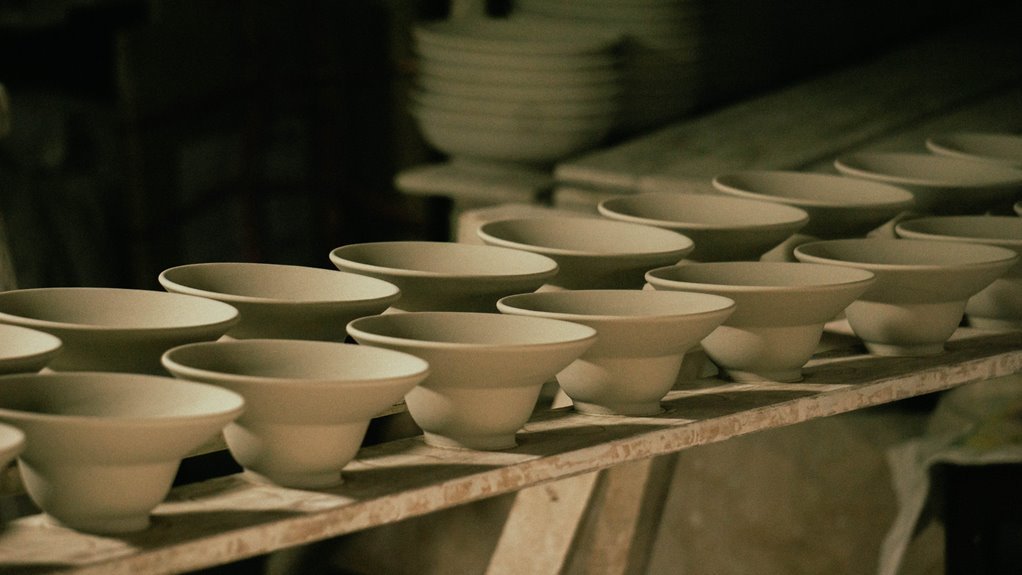
Flip your bowl over and hunt for an “oven-safe” label with a temperature rating. No label? Check the ceramic type: stoneware and porcelain handle heat better than porous earthenware. Inspect the glaze for cracks or damage, then try the water test (a dry bottom signals low porosity). Metallic trim and hand-painted details are problematic, so watch for those. If you’re still unsure, stick to 350°F max, and we have additional information to help you decide safely.
Most Ceramic Bowls Are Oven-Safe: Here’s How to Confirm Yours
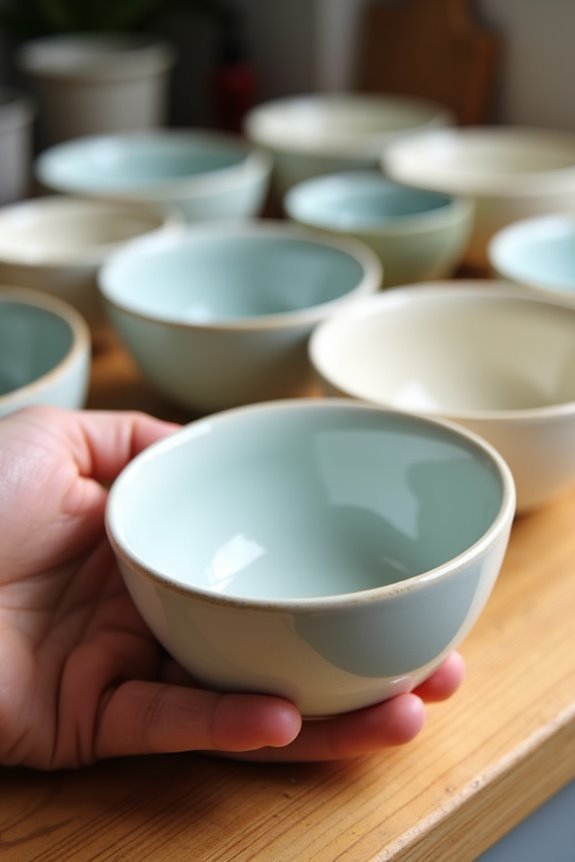
Ever wondered if that pretty ceramic bowl sitting in your cupboard can handle the heat of your oven? Here’s the thing: not all ceramic bowls are created equal, but many actually are oven-safe. The key? You’ve got to do a little detective work. First, flip your bowl over and look for an “Oven Safe” label or a little oven symbol on the base—no, really, manufacturers put it right there. If you don’t see it, check the glaze; lead-free, properly fired glazes work well here. High-fired stoneware and porcelain typically handle heat better than earthenware. Feel the bowl’s walls too—dense, thick construction signals reliability. When in doubt, grab that manufacturer information or product data sheet. Confirming safety takes just minutes and prevents problems later.

🔸Multi-Functional Large Soup Bowls: With a capacity of 16 oz, our single-handled soup bowl are perfect for different types of food, ranging from french onion soup, beef stew, bouillon, seafood bisque, chowder, lobster bisque, shepherd pie, cheese soup and more. Get creative and explore various culinary possibilities with our versatile bowl set.
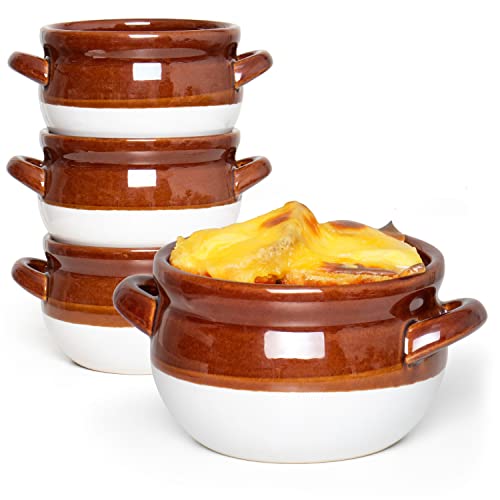
★FOOD-GRADE MATERIAL: The French onion soup bowls are made of high-quality ceramic, which can withstand higher temperatures. No peculiar smell and safe to use. The excellent coated glaze does not fade and protect it not easy todirty.

Casseroles, Crisps & More: Perfect for cooking up personal pot pies, stews, pastas, and we especially love using them to serve fruit crumbles.
Check for an Oven-Safe Label or Temperature Rating
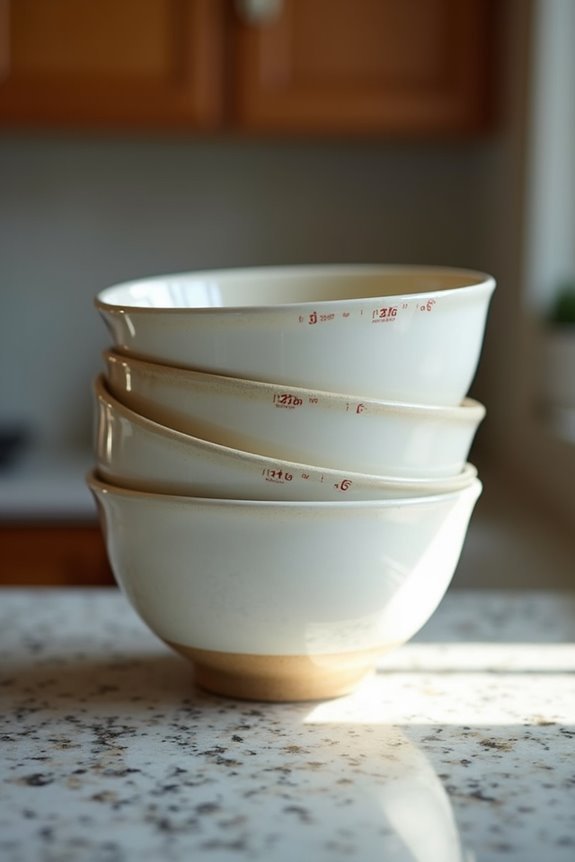
The easiest way to know if your bowl is oven-safe is to flip it over and look for a label or little oven symbol stamped on the bottom. Manufacturers typically mark this clearly. If you find one, check nearby for a temperature rating (like “oven-safe to 400°F”), because that number tells you exactly how hot you can use it without risking cracks or damage. When there’s no label at all, assume it’s not meant for the oven, since unlabeled bowls might contain glazes or materials that can’t handle heat.

Perfect Capacity: You will gert 4 packs of AVLA mini casseroles dish with the capacity of 9 ounce ( Normal Capacity ), suitable for single serving. Can be used for caramel pudding, souffle, jam, chopped blueberries, brushed butter, french onion soup, quiche and ice cream.

Versatile Bakeware Set: This 4 pack 20 oz bakeware set measures 7.5 x 5 x 1.7 inch (not include the handle). Ideal for baking, serving and reheating purpose. Great for pizza, bread, pasta, spaghetti, chicken, meat, beef, vegetables, storing and reheating leftovers, etc

Variety of uses: The 6 oz ramekins are the great size for you to make individual portions for everyone at the table or kitchen. Whether you are making creme brulee, souffle dishes, custand, flan caramel pudding, cheesecake, lava cake, french onion soup, blueberry muffins, ice cream,oliver or dipping sauce dish. These are great for
Look For Manufacturer Markings
Where should you start when figuring out if your ceramic bowl can handle the heat? I’d flip that bowl over and hunt for manufacturer markings—that’s your best resource. Look for an explicit Oven-Safe label stamped on the bottom; it’s like a green light telling you you’re good to go. You’ll also want to spot a temperature rating, something like “safe up to 430°F,” which tells you exactly what your bowl can handle. Check the product description too for mentions of kiln-fired or stoneware materials, since those typically work well with ovens. No markings anywhere? That’s your signal to skip the oven and stick with stovetop cooking instead. When in doubt, grab that manufacturer guide or packaging—they’ve got all the answers you need.
Understand Temperature Limits
Once you’ve spotted that oven-safe label, your next move is to understand what temperature your bowl can actually handle—because, no, really, not all oven-safe ceramics are created equal. I’ve learned that temperature limits vary wildly depending on your bowl’s material and construction. Here’s what I check:
- Find the manufacturer’s stated temperature rating on the label
- Note that stoneware and porcelain handle higher heat than earthenware
- Never exceed the listed temperature, even if you think it’ll be fine
- When no rating exists, treat it as not oven-safe
That maximum temperature? It’s your hard limit, friend. Pushing past it risks cracking or ruining your glazing. I always respect these boundaries because replacing a beloved bowl isn’t worth the gamble.
Ceramic Types and Oven Safety: Stoneware, Porcelain, Earthenware
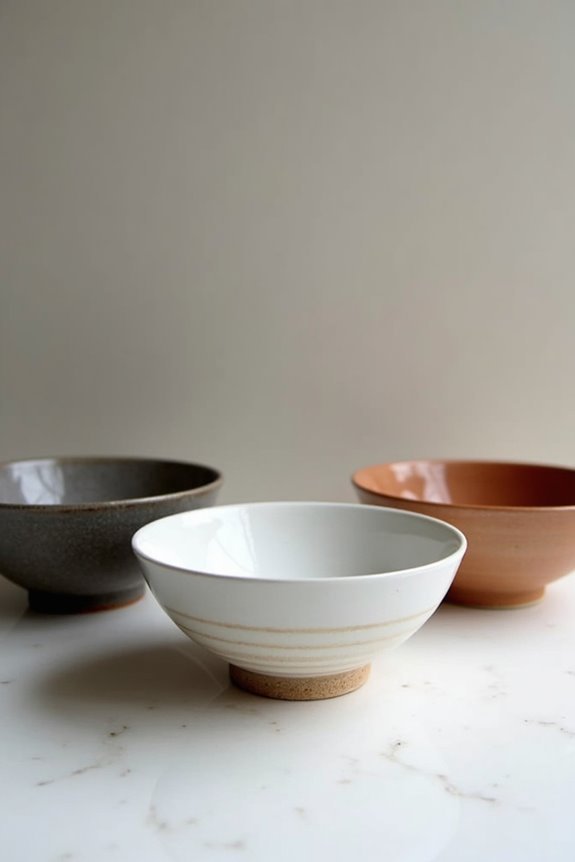
Now here’s where the ceramic type really matters—stoneware and porcelain, fired at super high temperatures, can handle your oven effectively because they’re dense and don’t absorb moisture the way earthenware does. Earthenware, on the other hand, is more porous (think of it like a ceramic sponge), which means it soaks up liquids and heat differently, making it less reliable when you’re trying to bake or reheat something. So if you’ve got stoneware or porcelain sitting in your kitchen, you’re probably in good shape, but earthenware bowls? Consider your options carefully before putting those in the oven.

Toxin-Free: Free from lead, cadmium, and harmful chemicals. Cook and serve safely for your family. Non-Porous Glaze: Resists stains from turmeric, masalas, and oils. Cleans...
Stoneware’s Superior Heat Tolerance
Why do some ceramic bowls handle the oven like champs while others crack at the slightest temperature change? Welcome to the world of stoneware, where heat tolerance meets reliability. Here’s what makes stoneware your oven’s best friend:
- Fired at super-high temperatures (often 1200°C or hotter), creating very dense material
- Non-porous construction that resists moisture absorption and thermal shock
- Thick, reinforced walls built to withstand serious heat without breaking
- Superior durability compared to earthenware or delicate porcelain
Stoneware’s heat tolerance is impressive. Its dense composition means it won’t crack when you pull it straight from a hot oven. The thick construction absorbs and distributes heat evenly, protecting your food and your bowl. It’s the reliable friend who always shows up, no matter what temperature challenge you throw at it.
Earthenware Porosity Limitations
If you’ve ever wondered why some ceramic bowls seem to absorb water like tiny sponges, you’re looking straight at the earthenware problem. Here’s the thing: earthenware stays porous even after firing, meaning it holds moisture consistently. When you pop that bowl in the oven, the water trapped inside expands from heat, and cracks appear. I’ve seen it happen, and it’s frustrating.
The tricky part? Just because a bowl looks fine doesn’t mean it’s oven-safe. Unglazed earthenware or damaged pieces are especially risky. Your safest option is checking the manufacturer’s label, since quality glazes can seal things up. But when you’re choosing between earthenware and stoneware, stoneware performs better in the oven every single time.
Inspect the Glaze for Quality and Damage
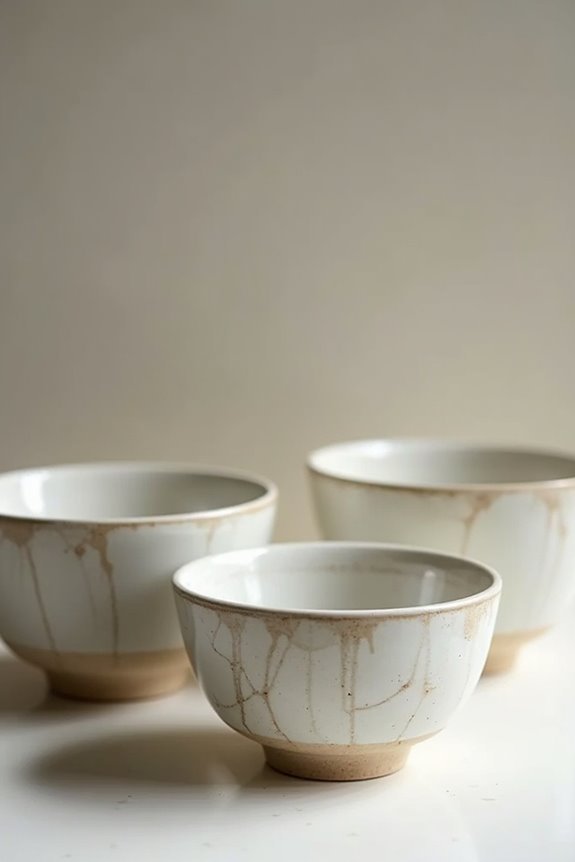
How’s your bowl’s glaze looking—smooth and shiny, or does it seem a little off? I’m going to walk you through what matters most here, because glaze safety and oven heat resistance are non-negotiable. Here’s what you’ll want to check:
- Run your fingers across the surface for smoothness and evenness
- Look for visible cracks, crazing, or rough patches under good lighting
- Inspect both the interior and exterior thoroughly
- Check for chips that’d compromise its ability to handle heat
A quality glaze protects your bowl, but a damaged one is a red flag. Uneven or cracked glazes let moisture sneak in, which causes real problems in the oven. If you spot any damage, skip using it for cooking. Your safety is worth it.

Interesting Styling: Hand-glazed yellow chick shaped sweet bowl. Looks like a simple soup bowl. Creative, cute design stimulates your imagination and inspires you, use it for salads, soups or snacks.

Chew proof waterer or feeder featuring wide profiles that lend stability

Durable & Safe: These ramen bowls are made of premium ceramic clay and glaze, which is free of lead and cadmium. Non-porous surface does not absorb food odors, stains or any impurities. Never worry about toxic chemicals leaching into your food. Much healthier and safer than melamine.
The Water Test: A Simple Check for Oven-Safe Ceramic
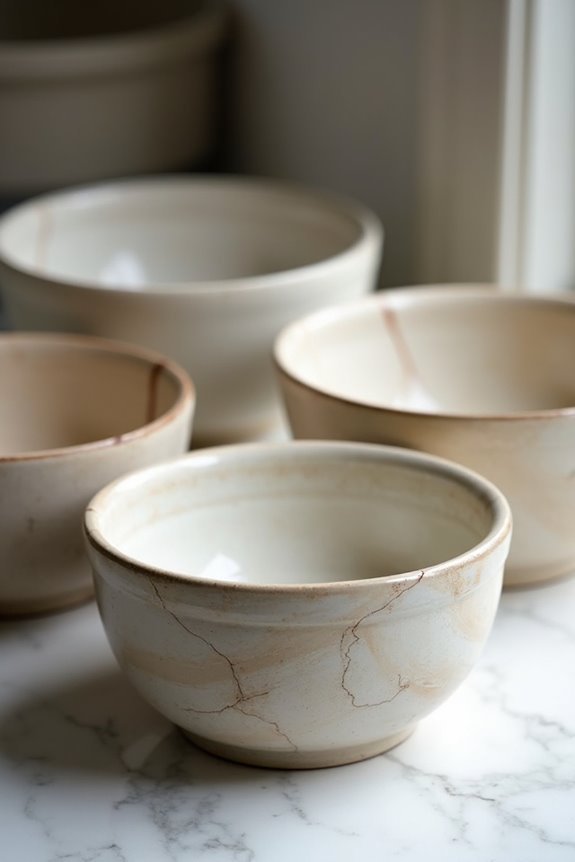
I’ll walk you through a straightforward test that reveals how porous your bowl really is: fill it with water, let it sit for a few hours, and watch whether it stays dry or gets damp (if moisture soaks in, that’s your answer right there). What you’re really checking is whether your ceramic can handle the heat without cracking, since porous bowls absorb water and expand when temperatures rise, which—no, really—can lead to shattering in the oven. The results matter, but they’re just one piece of the puzzle; pair what you learn from this test with the manufacturer’s label and a close look at the glaze to make your final call.

These 4 self-adhesive trim strips are designed for 30-inch wall ovens, adding a sleek, brushed stainless steel finish.
Premium stoneware is versatile, durable and designed for everyday use

Genuine Bundt pans are made of durable cast aluminum to achieve the most crisp, intricate cake detail possible
Assessing Ceramic Porosity Levels
Ever wonder what’s actually happening inside your ceramic bowl when you pop it in the oven? Porosity, basically—how many tiny holes your bowl’s got—determines whether it’s truly oven-safe. Here’s what I’ve learned about assessing porosity levels:
- Fill your bowl completely with water and let it sit for several hours
- Check if the surface stays dry or becomes damp afterward
- A damp bowl means higher porosity and greater cracking risk
- Dense stoneware or porcelain performs better than porous earthenware
If moisture seeps in, that’s your ceramic telling you it’s absorbing water, which causes problematic expansion when heated. Dense pieces resist this sneaky moisture infiltration, preventing thermal shock. Think of it like this: porous ceramics are sponges, while dense ones are shields. You’ll want that shield protecting your meals.
Water Absorption and Heat Risk
Since water and heat don’t work well together in your ceramic bowl, the water test helps you determine if yours can handle oven temperatures. Here’s what I do: I fill my bowl with water, let it sit for a few hours, then check if it’s absorbed any moisture. If it has, that indicates higher porosity, which means greater risk of cracking or shattering when heat hits it.
| Test Result | What It Means | Heat Resistance |
|---|---|---|
| Bowl stays dry | Low porosity | Better for oven |
| Bowl gets damp | Medium porosity | Risky |
| Bowl absorbs water | High porosity | Not oven-safe |
Non-porous bowls pass this test easily, indicating they’ll withstand oven heat without moisture-related damage. Keep in mind, no single test guarantees safety—always check your manufacturer’s label too.
Interpreting Test Results Accurately
So, what do those wet spots really tell you about your bowl’s oven readiness? I’m glad you asked, because interpreting your water test results correctly is important between a happy kitchen and a cracked-bowl disaster.
Here’s what I look for:
- Completely dry bowl – you’ve got a winner; it’s dense and oven-friendly
- Slightly damp spots – proceed with caution; test other indicators first
- Noticeably wet surface – high porosity means skip the oven entirely
- Any visible cracks or crazing – don’t use it, no matter what
The key thing? A positive result (staying dry) suggests your ceramic can handle heat. But here’s the deal: this test isn’t your only checkpoint. Combine it with glaze checks and manufacturer guidance. You’re building confidence, not just guessing, which honestly feels pretty good.
Spot Metallic Trim and Hand-Painted Details
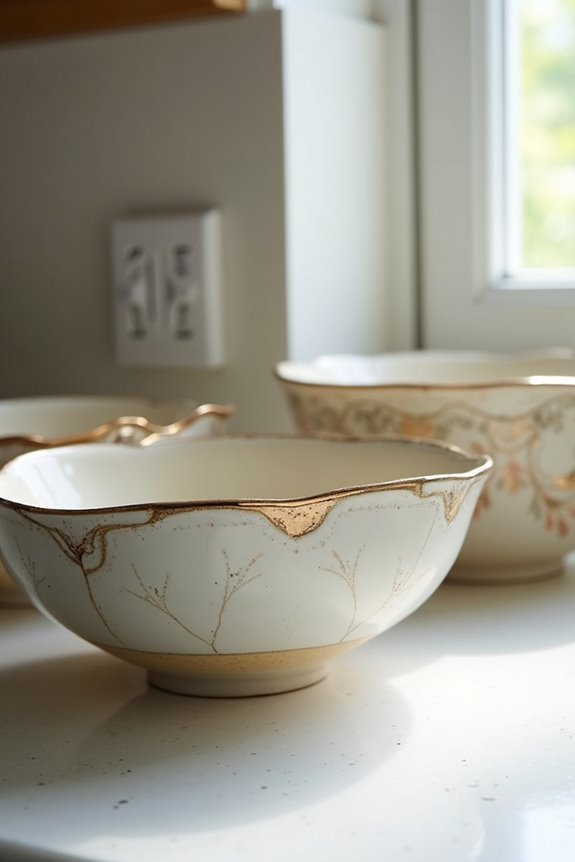
What’s lurking on the rim of your favorite bowl? That glittery metallic trim or those beautiful hand-painted details might be sabotaging your oven plans. I’ve learned the hard way that just because a bowl’s glaze is oven-safe doesn’t mean everything on it is—no, really.
Here’s the thing: metallic accents and real gold or silver decorations react unpredictably to heat. They can dull, flake, or discolor when temperatures rise. Hand-painted glazes sometimes include paints not rated for high heat either.
Before you pop that bowl in your oven, hunt for explicit oven-safe labeling on the bottom or packaging. Check whether metallic decorations are specifically listed as heat-safe. When in doubt, contact the maker directly. Your beautiful bowls deserve better than guesswork.
22 oz. Capacity for Holiday Servings: Generous size allows for hearty servings of soups, casseroles, and more, ideal for holiday feasts. These crocks are perfect for family dinners, ensuring everyone is satisfied without constant refills.

24 oz. Large Capacity Stoneware Soup Crocks: Each crock holds up to 24 oz., ideal for serving soups, stews, and casseroles. The ample capacity makes it perfect for family dinners, reducing the need for constant refills.

Great Value 12-Piece Set:This 12-piece stoneware dinnerware set includes 4 dinner plates (10.5"), 4 salad plates (8.5"), and 4 deep bowls (16 oz) — perfect for daily family meals or entertaining guests.
Assess Wall Thickness and Overall Construction
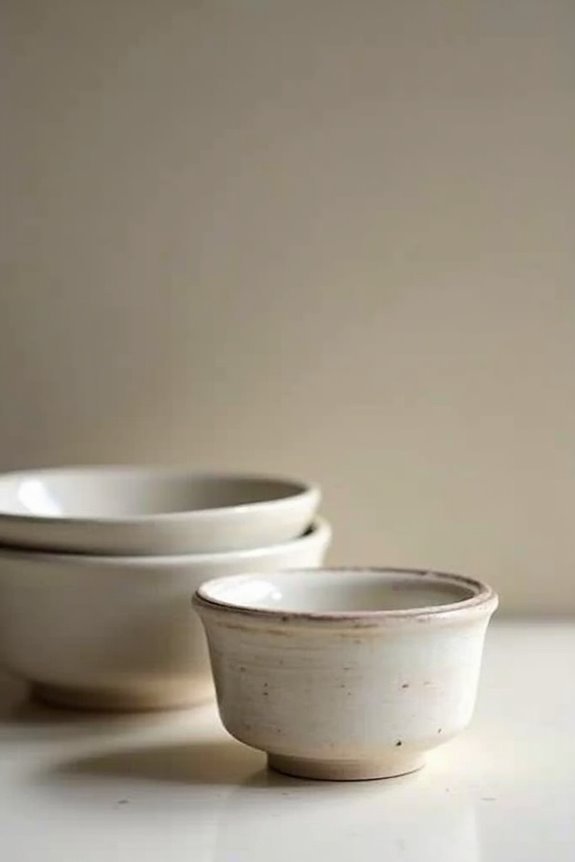
Once you’ve checked out what’s decorating the outside of your bowl, it’s time to look at what’s holding it together—and that’s where the real story of oven safety lives. I like to run my fingers along the walls and think about how they’ll handle heat. Here’s what I’m looking for:
The real story of oven safety lives in how a bowl’s constructed—run your fingers along the walls and feel how it’ll handle heat.
- Thicker walls that resist thermal shock better than thin ones
- Dense materials like stoneware, which signal stronger construction
- Reinforced edges and sturdy handles that won’t crack easily
- Smooth glazes without visible cracks, chips, or seams
When I spot irregularities, voids, or wobbly seams, I know that bowl’s staying on the counter. A well-made ceramic bowl feels substantial—it’s got weight and confidence. Pay attention to that feeling.

Safe for use -- Using a type of premium lead-free and non-toxic ceramic, it is very safe for use and the Dish can use for dishwasher microwave Oven Refrigerator Anytime.

【MADE OF DURABLE PORCELAIN】A type of premium LEAD-FREE and NON-TOXIC ceramic that is anti-chip, scratch resistant, bright surface, and easy to clean and maintain, longer service life. Safe for dishwashers, refrigerators, microwaves, and ovens. Get the most out of your investment with our MALACASA casserole dishes

Interesting Styling: Hand-glazed cute duck shaped baking dish. Looks like a simple casserole dish. Creative, cute design stimulates your imagination and inspires you, use it for BBQ, Desserts or Baking cheese.
Temperature Limits and Safe Heating Ranges
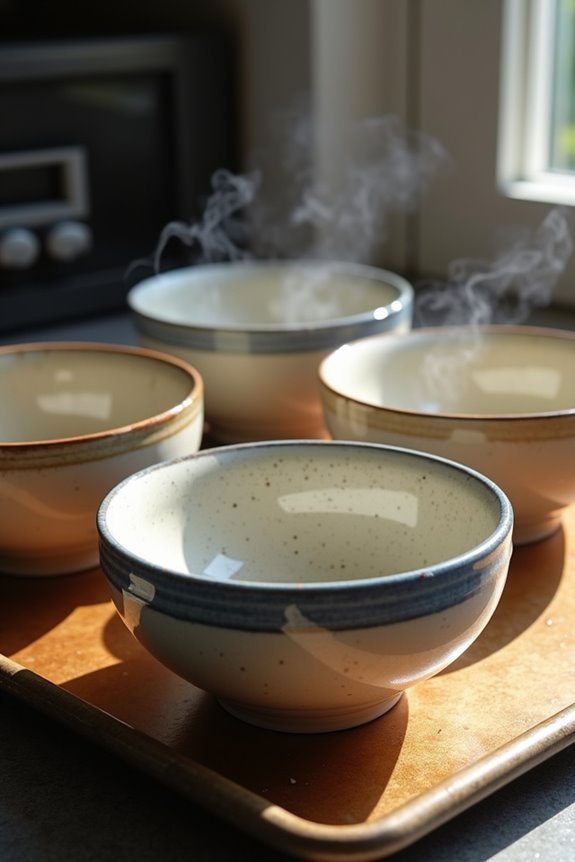
How hot can you actually push your ceramic bowl before it starts to protest? I’d check the manufacturer’s label first—most oven-safe ceramic bowls handle temperatures around 400–430°F comfortably. High-fired stoneware is your most reliable option here; it’s been through kilns exceeding 1200°C, so practical baking temps won’t faze it.
| Bowl Type | Safe Temperature | Best For |
|---|---|---|
| Standard ceramic | 400°F | Casseroles |
| High-fired stoneware | 430°F+ | Deep baking |
| Porcelain | 430°F+ | Delicate dishes |
| Unknown origin | 350°F | Conservative approach |
| Unlabeled bowls | Avoid | Safety |
When you’re unsure, stick with 400°F. Here’s my trick: preheat your bowl inside the oven to avoid shocking it with sudden heat. That gradual warming keeps everything happy and prevents cracks.
Best Practices for Heating Ceramic Bowls Without Cracking
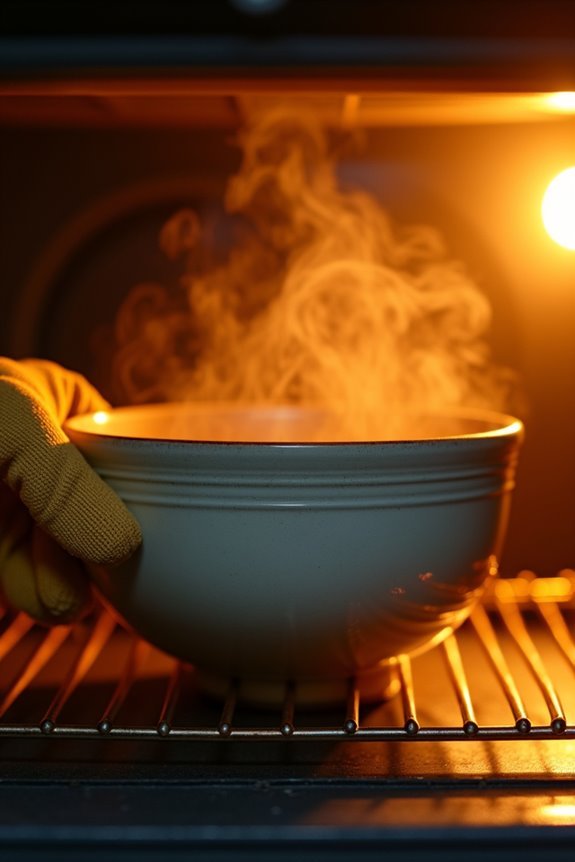
Now that you know your bowl can handle the heat, the real trick is getting it there without inviting disaster. You’ll want to follow these practices:
The real trick is getting your bowl to heat without inviting disaster. Follow these practices for lasting ceramic kitchen tools.
- Preheat your oven with the bowl already inside, letting both warm together gradually
- Never move a cold bowl straight into a hot oven—that thermal shock’ll crack it
- Keep the bowl away from broilers and stovetops, where intense heat concentrates in dangerous ways
- Always inspect for chips or cracks beforehand, making sure your glaze is smooth and lead-free
The key? Think patience. Let everything warm up slowly together, and your ceramic bowls will last for years, becoming reliable kitchen tools you can depend on.

Practical Size Set: Ceramic soy sauce dish set of 4, with a diameter of 4 inches and a height of 1.37 inches, is of moderate size and suitable for holding soy sauce, vinegar, dipping sauces, sauces, and various seasonings.

【Perfect for Large Dogs】Designed for large breeds like Golden Retriever and Labrador, this slow feeder bowl (9.7" x 2.2") holds up to 3 cups of food or water. Its shallow design ensures your pet easily reaches all the food while keeping portions controlled.
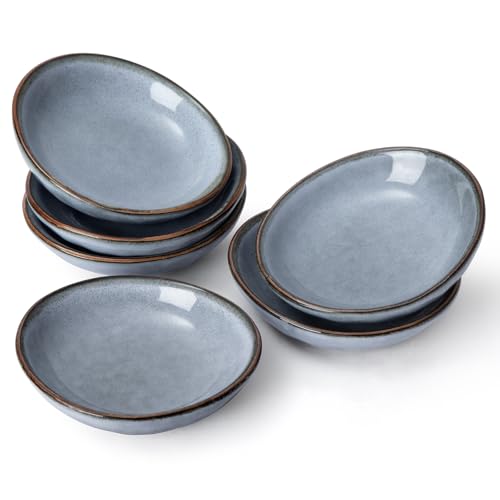
Small Bowls Set: Includes 6 ceramic bowls(2.1OZ, 3.96"L x 3.46"W x 0.98" H). Great for holding a wide variety of condiments. Suitable for serving fruits, butter, snacks, and appetizers as well. Practical for family gatherings, parties, and other social occasions.
Test Your Ceramic Bowl Gradually at Low Heat
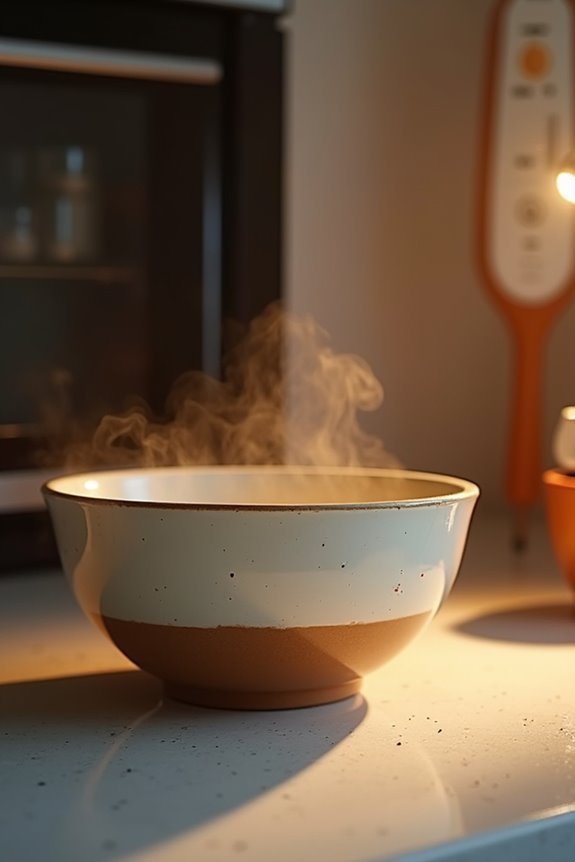
Before you place your ceramic bowl into a 350-degree oven, give it a gentle test run first. Start at a low temperature, around 200°F, and watch carefully for any warning signs like cracks or strange smells. Gradually bump up the temperature in small increments (think 25–50°F jumps) while keeping your eyes on the bowl. Always use it empty and dry, with no moisture that could cause trouble. If everything looks good at each step and there’s no warping or discoloration, you can confidently move forward within the manufacturer’s oven-safe range. This patient approach means you’re not gambling with your favorite bowl.
Signs Your Bowl Shouldn’t Go in the Oven
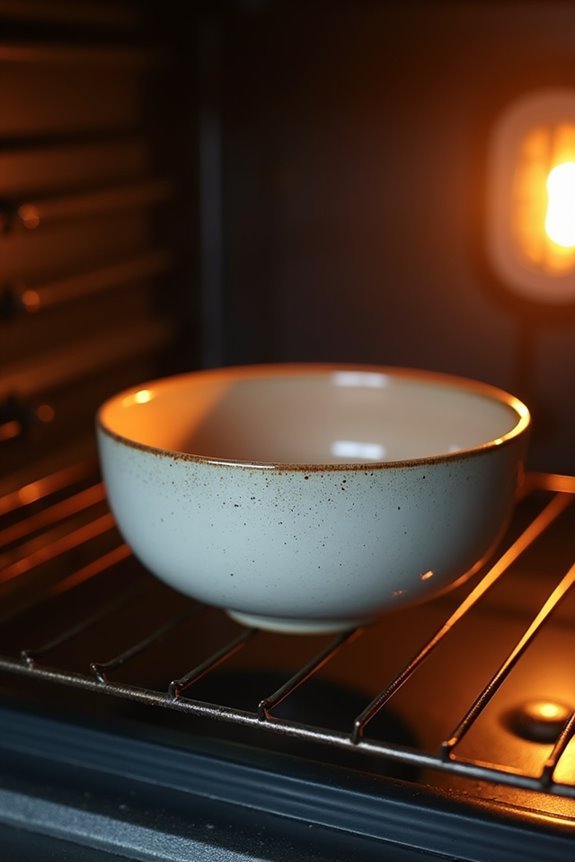
When should you pump the brakes on using a ceramic bowl in the oven? I’ve learned that certain red flags tell you to skip it. Here’s what I watch for:
- Missing an oven-safe stamp or manufacturer guidance (decorative pieces especially)
- Visible cracks, chips, or glaze cracks that indicate heat damage risk
- Porous materials like earthenware that absorb moisture and fail when heated
- Older ceramics showing wear, deterioration, or questionable glaze safety
I also steer clear of hand-made bowls with delicate glazes—they’re beautiful but risky. When glaze doesn’t match the clay’s expansion, things crack. If your bowl looks worn or you’re unsure about its history, it’s not worth the risk. There are plenty of oven-safe options out there.
When Direct-Oven Cooking Isn’t an Option
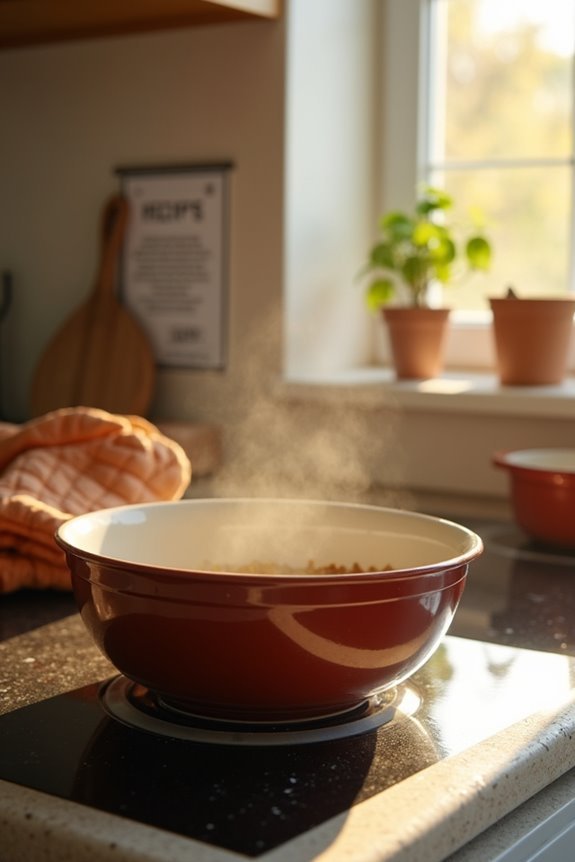
So you’ve identified the bowls to avoid—but what if you’ve already got one you love and really want to use? There are practical solutions available. Instead of risking your favorite bowl in direct oven heat, try using it as a serving vessel for oven-baked dishes. You can prep your food in an oven-safe stoneware or porcelain bowl instead, then transfer everything to your beloved ceramic once it’s done cooking. Another option? Use your bowl for cold sides, toppings, or finished dishes that don’t need high-heat treatment. This way, you’re keeping your treasured piece safe while still enjoying those delicious oven-cooked meals with style.