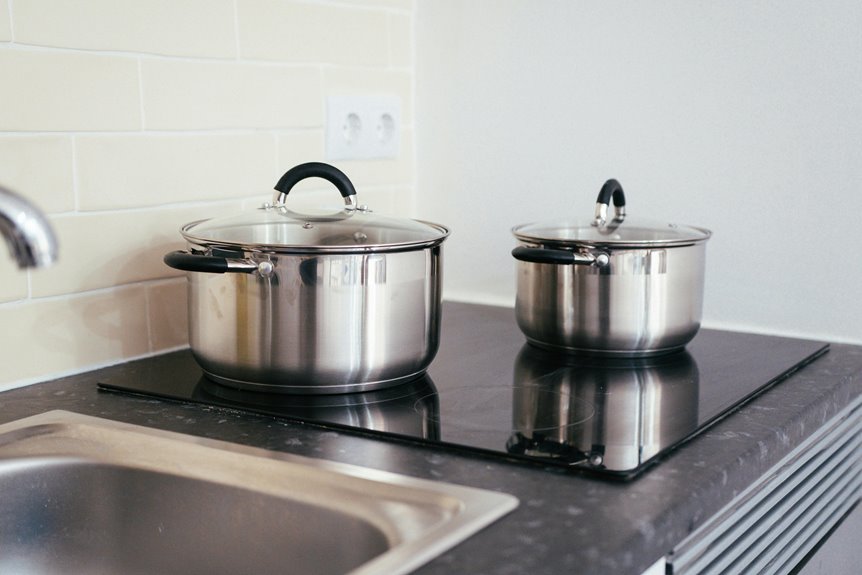
Ceramic cooktops use either radiant coils or induction technology beneath a smooth glass surface—and they heat differently. Radiant warms the surface first, then your pan; induction uses magnetic energy to heat your cookware directly, which is faster and more efficient. Both look sleek and clean up easy, but they’re fragile, pricey, and induction demands magnetic cookware. The real question is which actually fits your kitchen and cooking style.
What Sets Ceramic Cooktops Apart: A Quick Comparison?
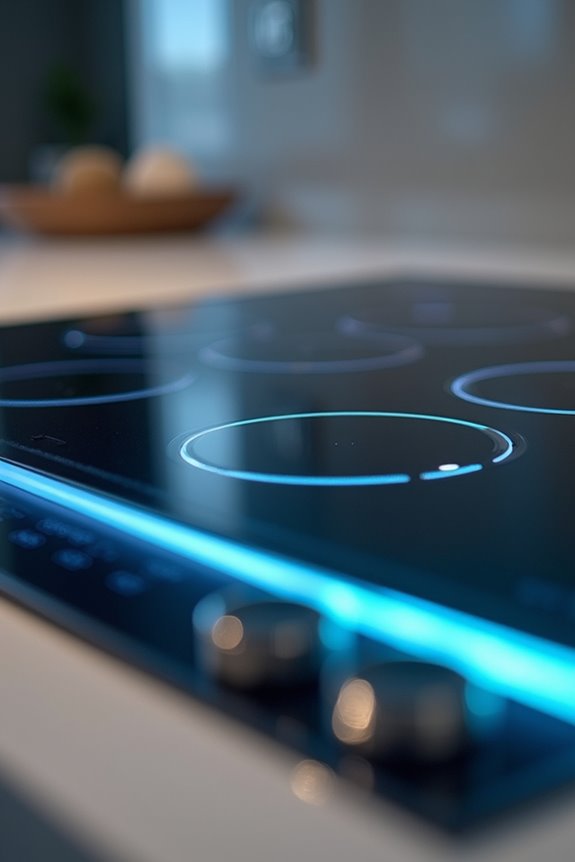
Ever wonder why some cooktops heat up faster than others, or why your friend’s stove stays cooler to the touch? I’ve discovered that ceramic cooktops come in two main varieties: radiant ceramic and induction cooktops. Here’s the thing—they both feature that sleek ceramic glass surface, but they work totally differently underneath.
Radiant ceramic uses metal coils that warm the surface first, then your pots. Induction cooktops, though? They’re the speed demons, heating magnetic cookware directly through magnetic energy. No, really—about 85% of energy actually reaches your food. That’s efficient. Plus, induction surfaces stay cooler when nothing’s cooking, while radiant ones can linger warm.
The catch? Induction requires magnetic cookware compatibility, whereas radiant models work with basically any pot. Both offer strong heat responsiveness, just in their own ways.
Optimal storage and easy stacking with the handles off saves up to 70% more space of Carote detachable handle pots and pans set.
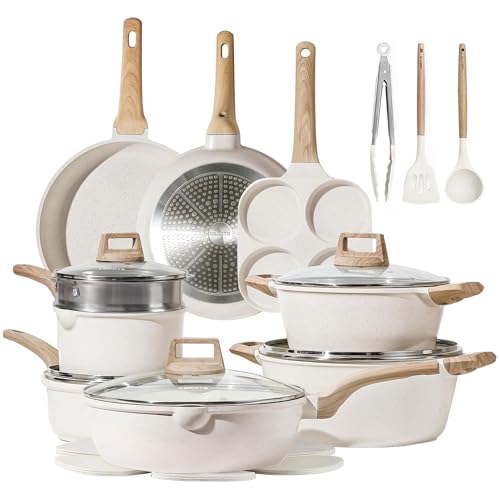
Reinforced die-cast aluminum construction ensures long-term durability and reliability while maintaining a lightweight design, bringing convenience to your cooking experience.

KITCHEN COOKWARE SET: This Cuisinart stainless steel cookware set includes 1.5 qt. & 2.5 qt. saucepans w/glass covers, 3 qt. saucepan w/glass cover & helper handle, 8 qt. stockpot w/glass cover, 8" skillet, 10" skillet and 7.08" steamer insert
How Radiant and Induction Ceramic Cooktops Heat Your Cookware

The heating process occurs underneath that smooth ceramic glass surface, and understanding how each type actually heats your pans is where things get interesting. With radiant cooktops, metal coils warm up first, then transfer that heat to your cookware—much like waiting for the stove itself to get hot before your pan begins heating. Induction cooktops, though, work differently; they use a magnetic field to heat your cookware directly, which means the ceramic glass stays cool and your pans respond instantly to temperature changes. Here’s the distinction: induction requires magnetic cookware, while radiant works with almost anything. If you’re someone who values speed and efficiency, induction’s faster heating response offers a practical advantage in your kitchen.

240V | 3100/1300 Watts | Fits model specific electric ranges

【A122B Radiant Cartridge Professional Compatibility】 – Designed as a replacement for the JEA8120ADB cartridge, this radiant element is compatible with Jenn-Air Designer Series cooktops and ranges, including models AP4118038, AH2103256, EA2103256, PS2103256, JES9750, A122B, A122BA, A121B, A122W, A122WA, 56 (check compatibility before purchase). Compatible with Kenmore electric cooktop models 62920245, 62922001, 62922112, 62922113, 62922114, 62922115, 62922116, 62922401, 20133(1988), 20213(1988), 20215(1988), 20234(1988), 22307(1988), 22308(1988), 22310(1988), 22314(1988), 20214(1988).

【 Excellent Quality 】WB30X24111 9in Dual Range Radiant component temperature sensor has been upgraded to a new composite metal material,with a longer service life.
Why Induction Ceramic Cooktops Heat Faster and More Efficiently
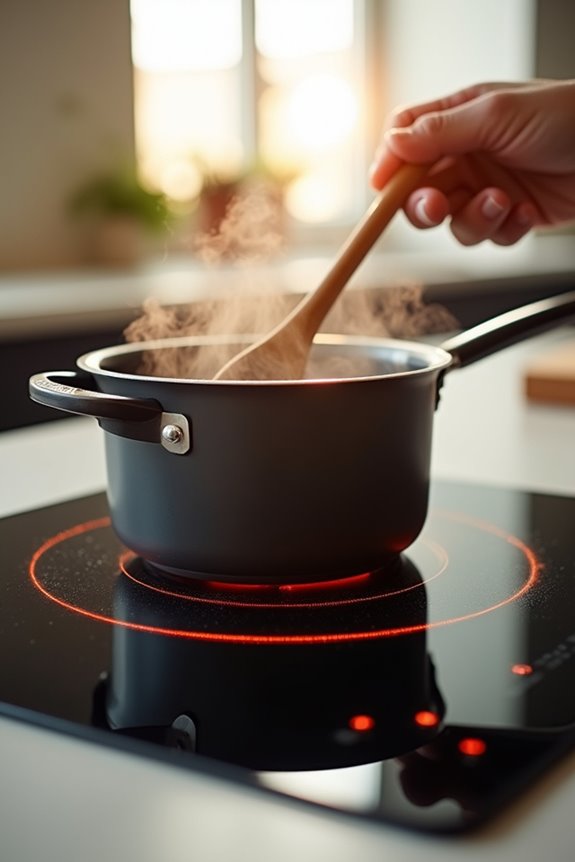
I’ve got to tell you, induction cooktops work by using magnetic energy to heat your pan directly rather than warming up the cooktop surface first, which means you’re getting heat exactly where you need it. What’s particularly noteworthy is that these cooktops deliver about 85% of their energy straight to your cookware—that’s considerably more efficient than older radiant systems—and you’ll notice your water boiling and temperatures changing rapidly when you adjust the dial. Plus, since the cooktop itself stays cool when there’s no pan on it, you get faster cooking times and an easier cleanup job afterward, with no burnt-on messes or dangerous hot surfaces to worry about.

MULTIPLY CLAD STURDY CONSTRUCTION: Multiply cladding technology produces the highest-quality 3 ply stainless steel cookware set in your kitchen. 304 stainless steel interior for safe, easy-clean cooking; a thick aluminum core for even heating; 430 stainless steel exterior for use on all cooktops. Allows heat to pass through the entire pan, bottom to sidewall, with quick & even heat.

【TRI-PLY STAINLESS STEEL】Tri-Ply Stainless Steel Pan Combines Ergonomic kitchenware Design and superior features for better cooking performance. Stainless steel surface doesn't react with food or alter flavors.
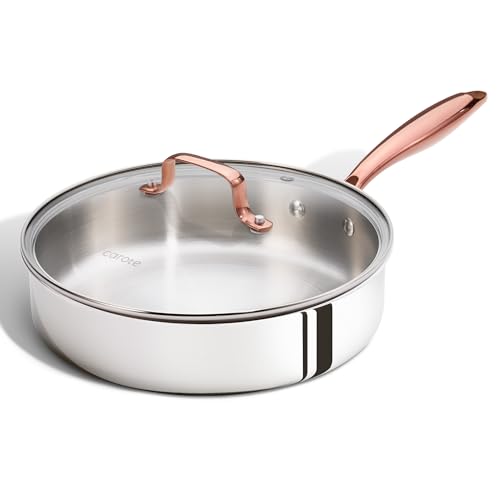
Fast & Even Heating — 3-PLY fully bonded from base to rim for consistent performance and durability; the stainless surface sears beautifully and is ideal for deg-lazing to make pan sauces.
Direct Heat Transfer Method
Imagine a cooking method where your pan does all the heavy lifting while the cooktop surface stays cool to the touch—that is induction cooking, in a nutshell. Unlike ceramic radiant cooktops, which heat through metal coils beneath the glass surface, induction uses magnetic energy to warm your cookware directly. This direct heat transfer method means your pan becomes the actual heat source, not the cooktop itself. When you’re comparing induction vs radiant options, here’s what sets them apart: induction delivers about 85% of its energy straight to your magnetic cookware, making heating efficiency superior. With ceramic radiant cooktops, heat transfers through the glass surface first, losing energy along the way. That’s why induction boils water faster and lets you adjust temperatures instantly. No more waiting around—your kitchen operates at your preferred pace.
Energy Efficiency Advantages
Now that you understand how induction works compared to ceramic radiant cooktops, let’s discuss what that means for your wallet and your dinner timeline. Here’s the thing: induction delivers about 85% of its energy directly to your cookware, while radiant cooktops waste more heat escaping into your kitchen. That efficiency difference adds up over time.
| Feature | Induction | Radiant Cooktop |
|---|---|---|
| Energy to Cookware | 85% | Much Lower |
| Boiling Speed | Fast | Slower |
| Surface Temperature | Cool | Hot |
| Heat Transfer | Direct Magnetic | Through Ceramic Glass |
| Monthly Savings | Higher | Lower |
You’ll notice faster cooking times and lower energy bills. Induction’s instant temperature response means you’re not wasting energy waiting around. Your cookware must be magnetic compatible, but that investment pays for itself through cooking efficiency and reduced utility costs.
Temperature Response Speed
What’s the real difference between waiting five minutes for water to boil and waiting two? Everything, honestly. That’s where temperature response speed really matters.
Here’s why induction cooktops win this race:
- Instant heat delivery straight to your cookware via magnetic energy transfer
- Radiant ceramic surfaces that lag behind because they must heat up first, then cool down slowly
- Quick adjustments you’ll notice immediately when you turn the dial
- Faster cooking times thanks to superior energy transfer efficiency
See, induction responds almost instantly to your temperature changes, while radiant heating struggles with sluggish response times. The ceramic surface itself heats up gradually, wasting precious minutes. With induction’s direct cookware compatibility and rapid heat-up time, you’re not just saving time—you’re choosing a more efficient cooking method. Faster meals mean more time for what matters.
Real Advantages of Ceramic Cooktops: Speed, Efficiency, and Cleanup
Why do so many home cooks switch to ceramic cooktops? They’re discovering some legitimate advantages. First, there’s the speed—induction models heat cookware very fast, delivering about 85% of energy directly to your pans (radiant vs induction, the difference is real). You’ll boil water in minutes. Then comes energy efficiency; you’re wasting less heat overall, which means lower utility bills. But here’s what really appeals to people: the easy cleanup. That smooth glass surface? No burner grates to wrestle with, just a quick wipe-down. The cookware compatibility varies depending on whether you choose radiant or induction, but both options give you that sleek, modern aesthetic. Plus, the surface stays cool when no pan’s present—a useful feature.

ROAD-READY 1000W EFFICIENCY: Designed for RVs, dorm rooms, offices, and small kitchens. The 1000W heating element delivers reliable cooking performance while being energy-efficient and compatible with standard outlets.
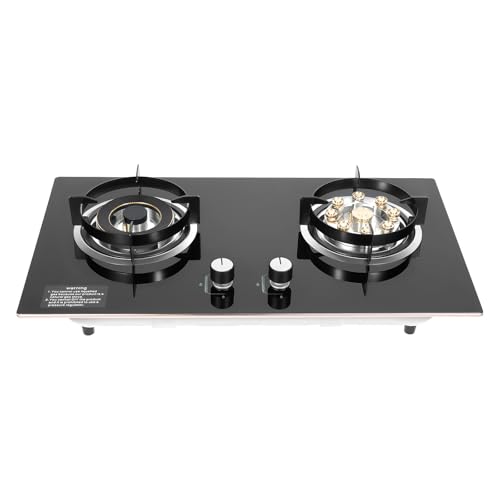
【High-quality Materials】: Premium copper, tempered glass, stainless steel, and cast iron have good ensuring long-term safe use.

EASY MORE FLEXIBLE COOKING - The Klarstein Delicatessa 90 Flex induction hob allows optimal use of space with minimal energy consumption during cooking. It combines technical innovation with a luxurious look.
Ceramic Cooktop Drawbacks: Fragility, Cost, and Cookware Limits
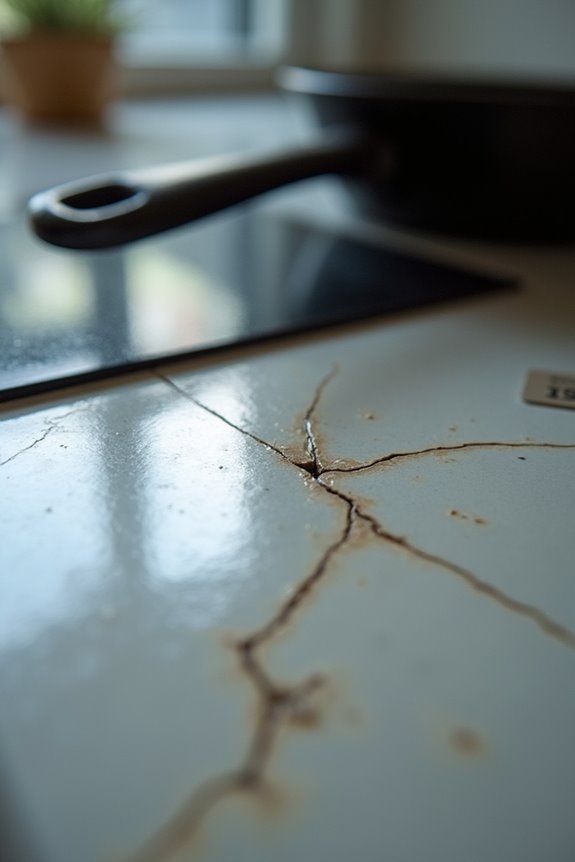
Now here’s where I’ve gotta be honest with you—ceramic cooktops come with some real trade-offs that might make you think twice before taking the plunge. The glass surface, while sleek and modern, is fragile, and it’ll crack or scratch if you’re not careful with heavy pots or rough cookware. You’ll need to clean up spills like sugar right away or they’ll bake on and damage the surface permanently. Then there’s the cost: these cooktops cost more than old-school coil models, induction versions add even more to the bill, and you might need to buy special cookware with smooth, thick bottoms—copper or aluminum won’t work because they’ll leave marks on your new stove.
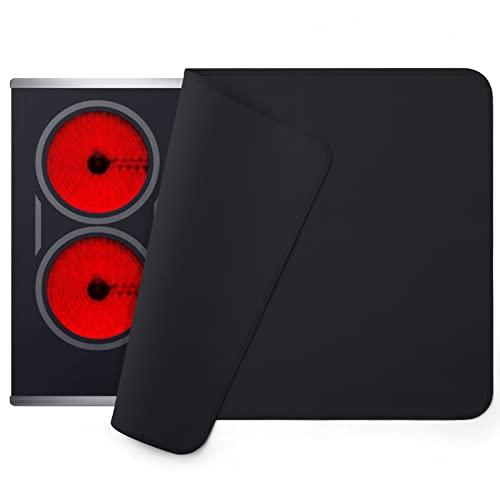
FIREPROOF AND HEAT RESISTANT - FLASLD glass stove top protector can resistant heat up to 550℉, It can placed on cooktop that is turned off but still hot.Fireproof does not mean that it can withstand all the heat of the induction cooker. We recommend waiting for 3 minutes after using the induction cooker before putting on the cover.

Glass Top Stove Cover:This extra large 28" x 20" inches silicone stove cover for glass top electric stove is perfect for protecting your electric stove top, kitchen counter top, electric cooktop, table, or washer-dryer top from scratches, spills, stains, scrapes, and dirt. It keeps the surface clean and tidy while providing an expandable workbench for food preparation

Glass Top Stove Cover: This extra large 28" x 20" inches silicone stove cover for glass top electric stove is perfect for protecting your electric stove top, kitchen counter top, electric cooktop, table, or washer-dryer top from scratches, spills, stains, scrapes, and dirt. It keeps the surface clean and tidy while providing an expandable workbench for food preparation
Surface Fragility and Damage
One thing you’ll want to know about ceramic cooktops—and I mean really understand—is that beneath all that sleek, gorgeous glass sits a surface that’s actually pretty delicate. I learned this the hard way, and you don’t have to.
Here’s what can go wrong:
- Heavy object impact cracks the ceramic glass surface instantly
- Rough cookware bottoms (aluminum, copper) leave scratches and marks
- Rough finishes on pans create permanent damage over time
- Glaze and chip risk increases with careless cleaning
See, your ceramic glass surface needs respect. Drop a cast-iron skillet, and you’re looking at a costly repair. Use rough-bottomed pans, and you’ll watch scratches accumulate. Even cleaning after cooling requires care—no scouring pads allowed. It’s a commitment, but understanding these limitations upfront gives you the information you need to care for your cooktop properly.
Premium Pricing Considerations
So here’s the thing about ceramic cooktops that nobody warns you about until you’re staring at your credit card statement—they’re expensive, and I mean *really* expensive compared to your basic electric or gas options. Induction models cost even more, no, really, but they deliver faster heating and superior efficiency that’ll save you money long-term. Here’s what gets you: the premium pricing reflects that sleek glass-ceramic surface, precise temperature control, and easy cleaning and care. Then there’s the cookware compatibility issue—induction requires special ferromagnetic pans, while radiant heating’s more flexible. I won’t sugarcoat it; that upfront investment stings. Yet if you’re someone who values modern aesthetics and cooking precision, you’re part of a group that believes these ceramic cooktops justify their cost.
Cookware Compatibility Requirements
Before you bring home that ceramic cooktop, check what’s hiding in your kitchen cabinets—because not all your pots and pans will work with it.
Here’s the thing: ceramic glass surfaces work with most cookware, but induction models are pickier. You’ll need ferro-magnetic cookware that responds to magnetic fields. Non-magnetic pots simply won’t heat up on induction surfaces.
What you should know:
- Induction cooktops require special magnetic cookware
- Radiant models with metal coils work with standard pots
- Check your cookware bottoms for magnetic compatibility
- Some brands offer matching cookware with purchases
The advantage? Many manufacturers include induction cookware compatibility sets, so you’re not starting from scratch. It’s worth checking what you’ve got before deciding which ceramic cooktop fits your kitchen and budget.
Your Current Pans Won’t Work: Here’s Why?
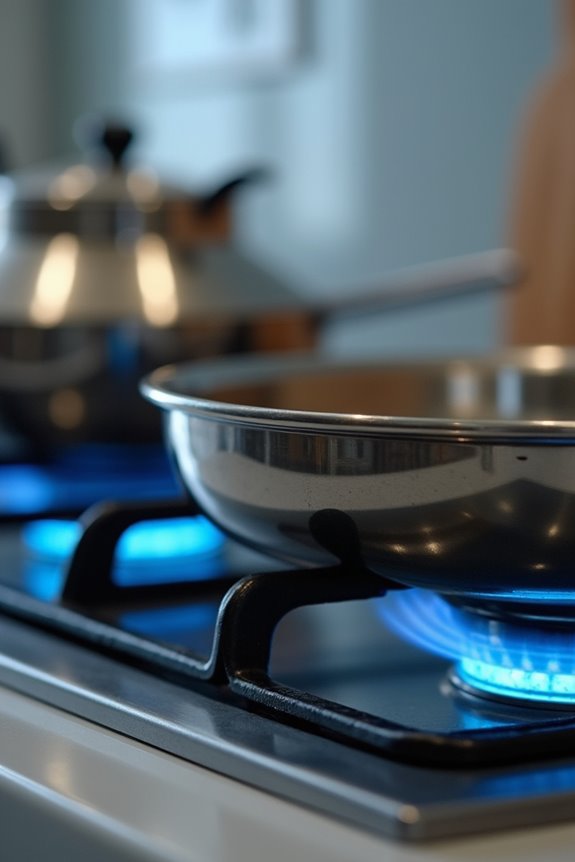
If you’ve just bought a ceramic stovetop, your favorite pans probably won’t work the same way they did before. See, radiant ceramic cooktops use metal coils under glass to transfer heat indirectly, which means they’re pickier about cookware compatibility than you’d think. Unlike induction cooktops that rely on magnetic energy and require ferromagnetic pans, ceramic radiant surfaces work with most cookware—but here’s the catch: flat-bottomed pans heat faster and more evenly. If your pans have curved or warped bottoms, you’ll notice slower heat response and uneven cooking. The good news? You’re not buying all new stuff necessarily. Just check your pan bottoms, swap out the warped ones, and you’re set.

Set Includes: 8'' fry pan, 9.5'' fry pan, 11'' fry pan, 2-qt saucepan with lid, 2.5-qt stockpot with lid, 4.5-qt stockpot with lid, 6-qt stockpot with lid, 4.3-qt sauté pan with lid, ladle, slotted spatula, spatula, tongs, pasta sever, steamer, 7*pan protectors.

Reinforced die-cast aluminum construction ensures long-term durability and reliability while maintaining a lightweight design, bringing convenience to your cooking experience.

Superior Nonstick Performance: Featuring a titanium nonstick coating, our pots and pans set offers exceptional durability and effortless food release, making cleanup easier
Don’t Break Your Cooktop: Common Mistakes That Cause Cracks
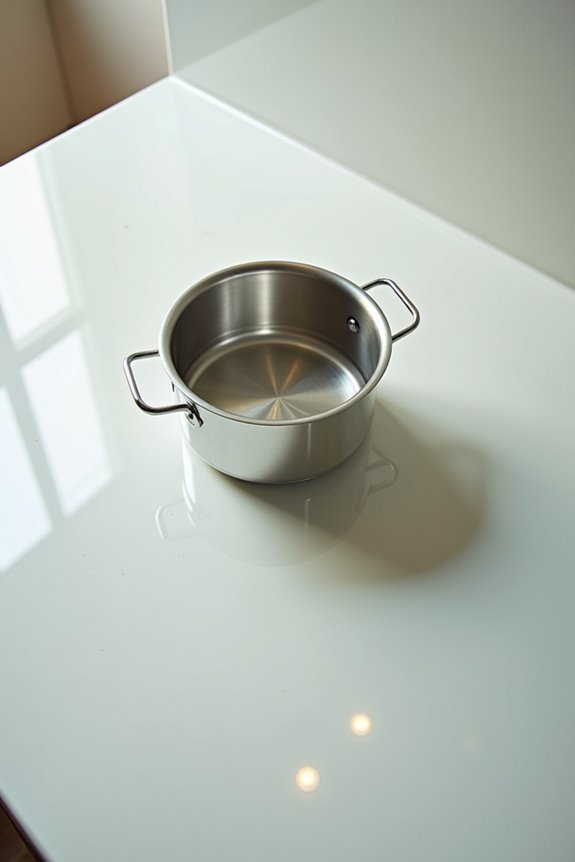
Your ceramic cooktop’s smooth surface looks tough, but I’ve learned the hard way that it’s actually pretty vulnerable to three main culprits: heavy objects crashing down on it, hot lids trapping air and causing stress fractures, and dragging your pots across the glass like you’re moving furniture (no, really—it happens more than you’d think). Each of these mistakes puts pressure on that beautiful surface in ways it just wasn’t designed to handle, and once a crack starts, there’s no going back. The good news is that knowing about these dangers means you can avoid them, which I’ll show you how to do in the next few sections.

[Powerful Performance For Faster Heating - A122B Radiant Cartridge]This Black Jenn-Air Radiant Cartridge A122B A122BA is a ultra quick-start radiant element cartridge, with w/Large 8" 2000W element, Small 6" 1200W element and ceran glass-ceramic surface. No need to worry about damage to the jenn-air A122B surface element, this jenn air cooktop replacement parts, A122B slide-in electric range/cooktop radiant element cartridge reinforced metal frame will provide protection, making the overall performance more stable and longer-lasting.
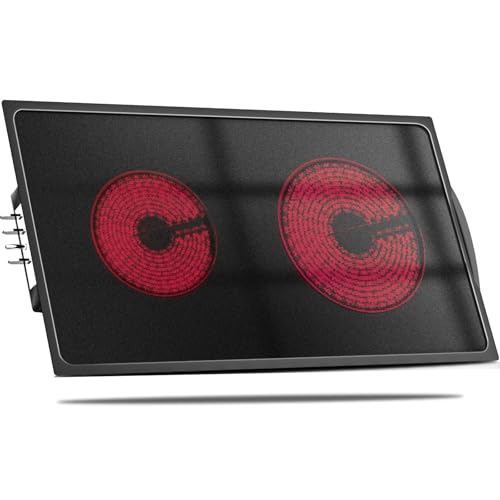
【Upgraded A122B Jenn air Cooktop Replacement Parts- Faster Heating】Black Jenn Air Radiant Cartridge A122B A122BA replacement cartridge heat up faster but turn off when they reach temperature and cycle on and off to keep the set temp. Jenn air cooktop burners JEA8120ADBA Radiant cartridge a122ba with w/Large 8" 2000W element, Small 6" 1200W element and ceran glass-ceramic surface will provides consistent and efficient cooking performance on compatible cooktop surfaces. a122b jennair cooktop parts burners are fast and accurate, fits perfectly in Jenn air cooktop module.

COMPATIBILITY AND REPLACEMENT PARTS: Engineered as a direct replacement for JEA8120ADB black radiant cartridge. This A122B A122BA stove cartridge assembly is compatible with Jenn-Air Designer Series cook-tops, electric slide-in ranges, and Whirlpool dual fuel ranges. It precisely replaces part numbers AP4118038, AH2103256, EA2103256, PS2103256, EAP2103256, and JES9750. Please verify your original appliance model and dimensions before purchasing to ensure an exact fit
Heavy Objects And Impacts
Carelessness around your ceramic cooktop—no, really—can turn a beautiful cooking surface into a spiderweb of cracks faster than you’d think. Here’s what matters most:
- Dropping heavy items transfers dangerous stress to the glass, even when cool
- Point loads from cans create weak spots that crack easily if bumped
- Dragging rough pots scratches and weakens the surface over time
- Ignoring small chips lets damage spread into serious safety hazards
I know it’s tempting to toss things around, but your ceramic cooktop’s glass surface is tougher than it looks—yet fragile under impacts. Micro-fractures develop invisibly, waiting to become real problems. Inspect regularly for damage, and stop using cracked areas immediately. Treating it gently keeps your cooking space safe and beautiful.
Hot Lids And Trapped Air
While keeping your cooktop safe from heavy impacts matters plenty, there’s another sneaky threat hiding right in your kitchen—one that doesn’t require dropping anything at all. That threat? Hot lids trapping air against your ceramic cooktop’s glass surface. Here’s the thing: when you leave a lid sitting on the hot glass, air gets trapped underneath, and removing it suddenly causes thermal shock. The temperature change stresses your cookware and cooktop, potentially cracking the glass (no, really). Instead, practice smart lid handling by removing hot lids away from the cooktop or letting them cool first. These simple cookware safety habits will help keep your ceramic cooktop intact and your kitchen running smoothly.
Dragging Cookware Across Surface
One habit that’ll silently wreck your ceramic cooktop? Dragging cookware across the surface. I learned this the hard way, and you don’t want those permanent scratches staring back at you.
What works to protect your smooth-top surface:
- Always lift and place pans down flat instead of sliding them
- Choose flat-bottomed cookware with smooth surfaces for minimal resistance
- Avoid rough-bottomed, aluminum, or copper pans that increase scratch risk
- Keep sliding to a minimum, even when cooled, since friction still damages the glaze
Your ceramic cooktop’s scratch resistance depends on proper cookware handling. Pair this practice with regular cleaning using non-abrasive cleaners and soft cloths, and your cooktop stays in good condition. It’s the easiest way to keep your investment looking brand new for years.
Cleaning Your Ceramic Stovetop Without Scratching or Marking
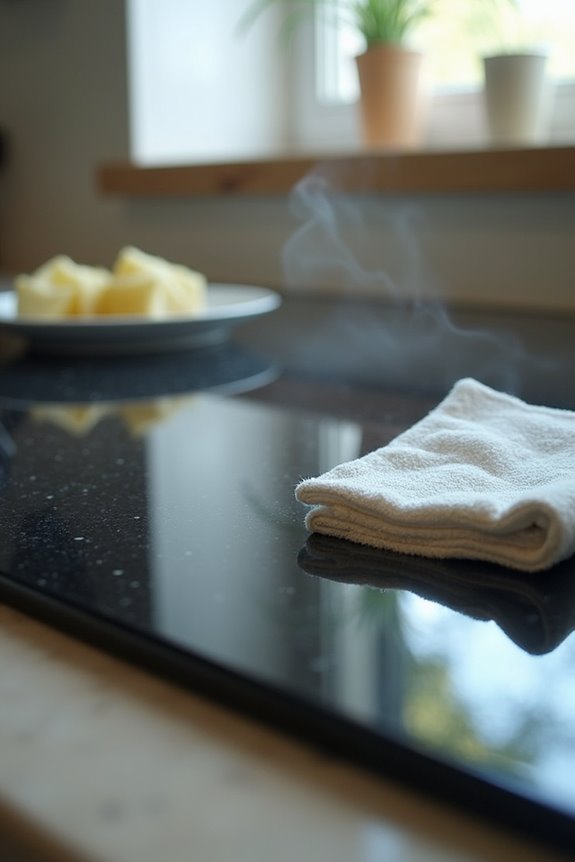
Because your ceramic stovetop’s smooth, gleaming surface is actually pretty delicate, the way you clean it matters just as much as how often you do it. Always reach for a soft sponge or glass-ceramic cleaner, never metal pads—those scratches aren’t worth it. When spills happen, tackle them after slight cooling to prevent baked-on residue from setting in permanently. Here’s the routine: gently rub with a soft sponge, rinse with water, then dry completely with a clean cloth. The key is to never drag cookware across the surface, and avoid harsh scrubbers altogether. That final polish with a dry cloth gives your ceramic cooktop that sparkly finish and keeps it looking brand new.

Fast & Even Heating: 3-PLY fully bonded from base to rim for consistent performance and durability; the stainless surface sears beautifully and is suitable for deg-lazing to make pan sauces
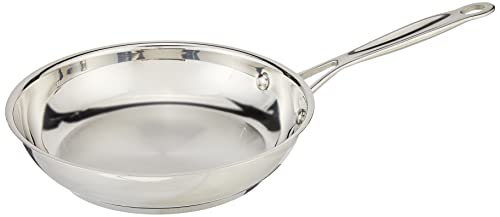
EXCEPTIONAL DESIGN: enjoy mirror finish, classic look and professional performance. Aluminum encapsulated base heats quickly and spreads heat evenly– eliminating hot spots
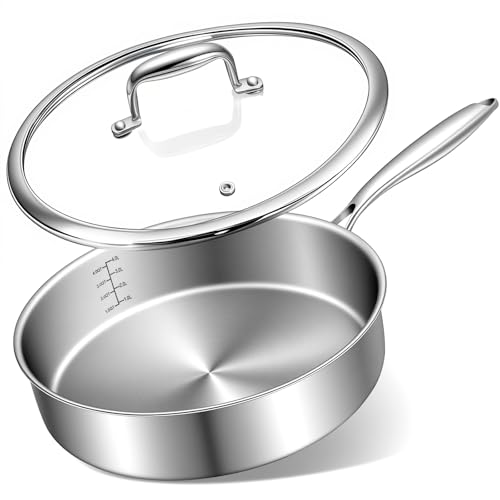
MULTIPLY CLAD STURDY CONSTRUCTION: Multiply cladding technology produces the highest-quality 3 ply stainless steel cookware set in your kitchen. 304 stainless steel interior for safe, easy-clean cooking; a thick aluminum core for even heating; 430 stainless steel exterior for use on all cooktops. Allows heat to pass through the entire pan, bottom to sidewall, with quick & even heat.
Foods That Destroy Ceramic: Sugary Spills, Metal Pans, and More
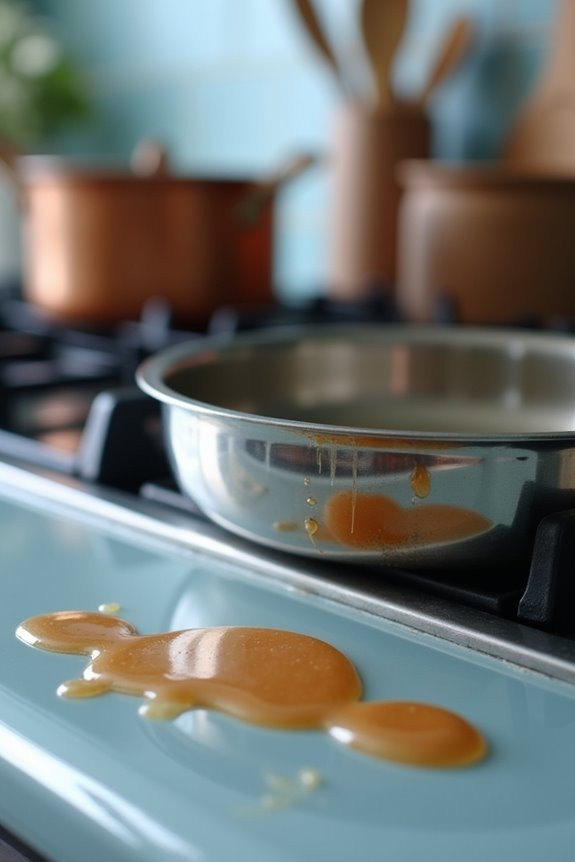
Your ceramic cooktop’s worst enemies aren’t always what you’d expect—they’re hiding in your kitchen right now. I’ve learned that protecting your ceramic surface means watching out for specific culprits:
Your ceramic cooktop’s worst enemies aren’t always what you’d expect—they’re hiding in your kitchen right now.
- Sugary spills bake on fast and damage the finish permanently
- Aluminum bottoms and copper pans leave marks you can’t remove
- Metal scrubbers scratch deeply—they cause significant damage
- Rough cookware creates permanent marks with every use
Here’s the thing: sugary spills need prompt attention after slight cooling, or they’ll harden onto your ceramic surface. You’ll want smooth cookware with flat bottoms instead. I always clean with soft sponges and ceramic-friendly cleaning solution, never metal pads. Avoid aluminum bottoms entirely. These simple choices keep your cooktop looking new and functioning properly for years.

Efficient and Safe Induction Cooking: Experience the future of cooking with our SINC4B302W 30" Wide 208-240V 4-Zone Induction Cooktop. Using electromagnetic heating technology, heat is generated directly inside your cookware, ensuring a highly efficient cooking process. This not only reduces energy waste but also provides faster heating and a safer cooking experience.

Gas Saving Efficiency: This windproof wok ring is engineered to reduce gas consumption by 30-40%, helping you save energy and lower cooking costs with your gas stove

Complete Kitchen Bundle – Includes Forno Leonardo Espresso 30-Inch Induction Range (FFSIN0982-30WHT) and Forno Espresso Gallipoli 30-Inch French Door Refrigerator (FFFFD1974-31WHT). Matching white finishes with stainless steel trim and brass accents create a timeless, coordinated design for modern kitchens.
Should You Use Your Ceramic Cooktop as Extra Counter Space?
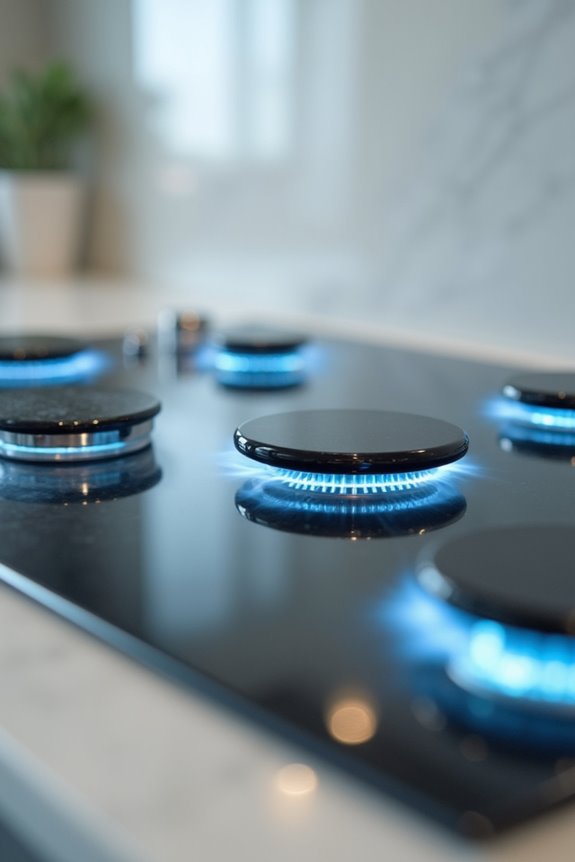
Now that you know what destroys your ceramic cooktop, you might be wondering if that flat, smooth surface could pull double duty as extra counter space—and honestly, it’s tempting when you’re cooking a big meal and counter room disappears fast.
Here’s the thing: you *can* use it temporarily, but proceed with caution. That beautiful, grate-free surface is vulnerable to impacts and heat damage from nearby cooking. Skip heavy cans or jars that’ll crack the ceramic, and never pile hot lids directly on it—trapped air causes real problems.
For surface protection and maintenance, keep things light and clean. Wipe spills quickly before they caramelize into permanent spots. Avoid dragging cookware across it, and make sure pot bottoms stay dry and clean.
It works as backup storage—just treat it gently.
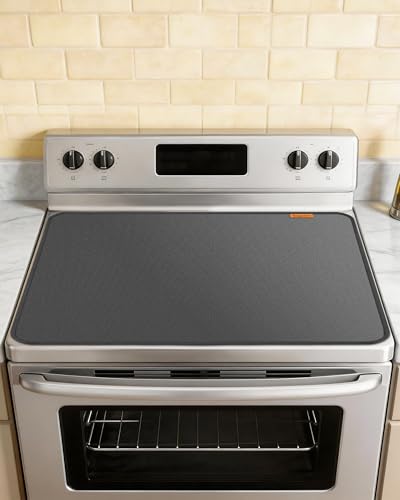
Fireproof: This product is made of fiberglass and can withstand high temperatures up to 600°F (approximately 315°C). It is suitable for covering burners that have been turned off but still retain residual heat. Please note: Do not use it on an active stove. After using an induction cooktop or electric stove, wait at least 2 minutes for the cooktop surface to cool sufficiently before placing the cover to ensure safety and product longevity
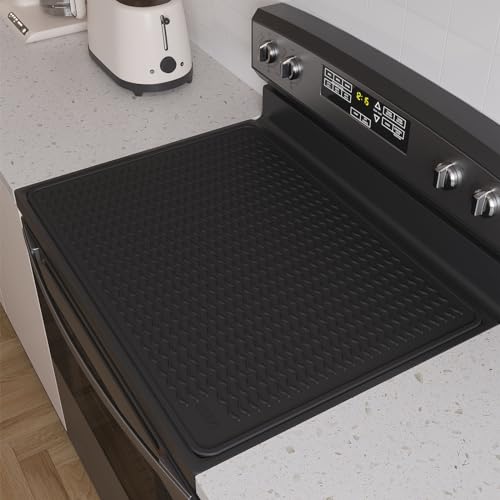
[Electric Stove Top Cover] Our 27.9" x 19.9" inches silicone glass stove top cover protector for electric stove is perfect for protecting your electric stove top, kitchen countertop, electric range top, table or washer dryer top from scratches, spills, stains, scrapes and dirt. Designed to fit most glass-topped induction cookers, it instantly creates extra counter space for your culinary adventures.

【Scratch & Spill Protection】PONGARD stove top covers for electric stove protect your electric, induction, or ceramic cooktop from scratches, scuffs, and stains, keeping it clean and damage-free.
Why Your Cooktop Gets Sluggish (And How to Keep It Fast)
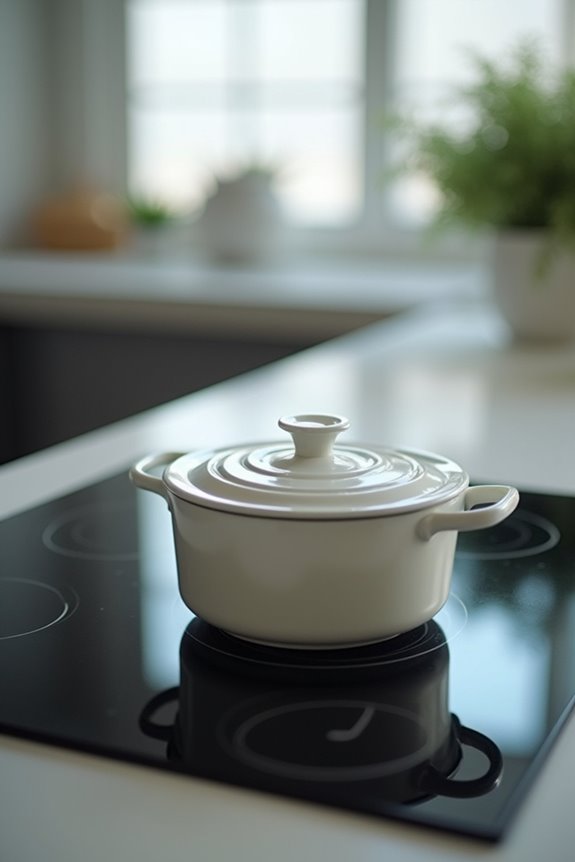
Have you noticed your ceramic cooktop taking forever to heat up lately? I’ve been there, and honestly, it’s usually fixable. Here’s what slows down your heat delivery:
- Buildup on the cooking surface blocks energy from reaching your cookware
- Dirty cookware bottoms prevent proper contact with the ceramic cooktop
- Scratches damage the radiant heating elements underneath
- Incompatible induction cookware won’t work with magnetic models
Regular maintenance keeps your energy efficiency in good working order. I wipe spills promptly after slight cooling, use a glass-safe cleaning solution, and always check that my induction compatible cookware has clean, dry bottoms before cooking. These small habits work. Your cooktop will perform better with faster heat delivery and improved performance, which matters when dinner needs to be ready on schedule.
Radiant vs. Halogen vs. Induction: Which Ceramic Cooktop Should You Choose?
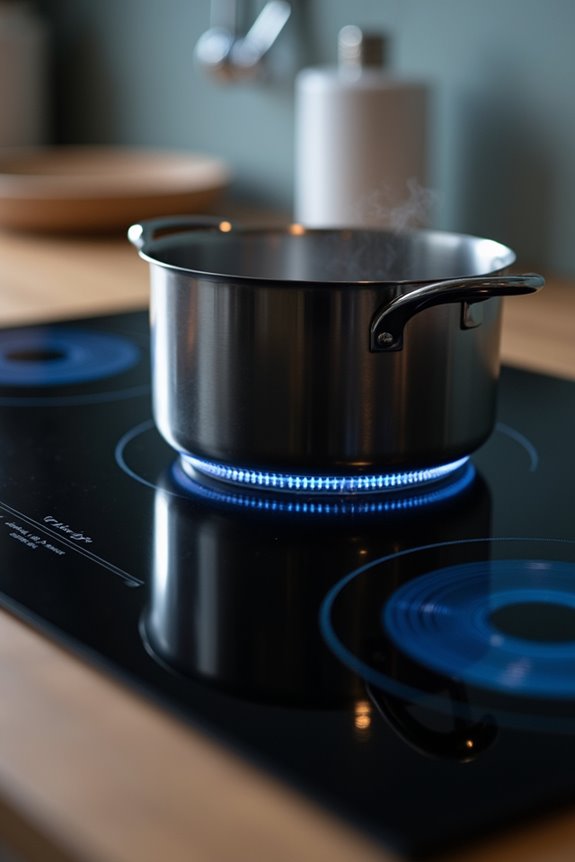
When you’re standing in the appliance store trying to figure out which ceramic cooktop won’t leave you frustrated in six months, the choices can feel overwhelming—but they’re actually pretty straightforward once you know what each type does.
Radiant ceramic cooktops use metal coils under glass for steady, reliable heat transfer. Halogen radiant models swap those coils for halogen lights, heating faster but costing more. Then there’s induction cooktops, which use magnetic fields to heat your cookware directly—delivering about 85% energy efficiency. Induction offers instant temperature changes and faster cooking speed, though it requires ferromagnetic cookware compatibility. All three sit under ceramic glass, but induction stays cool when no pan’s present, making cleanup easier.
When to Replace Your Cooktop (And What to Buy)
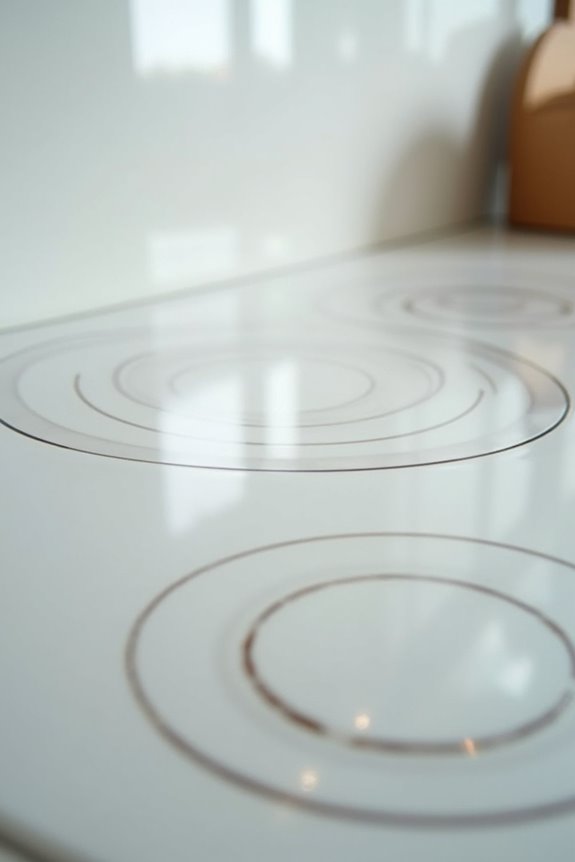
So you’ve figured out which cooktop type fits your cooking style—but how do you know when it’s actually time to swap out your old one, and what should you grab instead?
Here’s the thing: if your cooktop’s heating zones are uneven or your surface is cracked, replacement time’s arrived. Consider these factors:
If your cooktop’s heating zones are uneven or the surface is cracked, it’s time for a replacement.
- Heat transfer efficiency: Induction cooktops deliver 85% energy to cookware, while radiant ceramic cooktops waste more heat
- Cookware compatibility: Induction requires ferromagnetic cookware; radiant ceramic works with nearly anything
- Replacement cost: Both demand upfront investment, though induction might need new pans
- Energy efficiency: Induction’s instant responsiveness beats ceramic’s slower heat delivery
When you’re ready, induction offers superior performance and easier cleanup—the surface stays cool. Yet if you’re keeping existing cookware materials, radiant ceramic cooktops remain reliable, budget options.